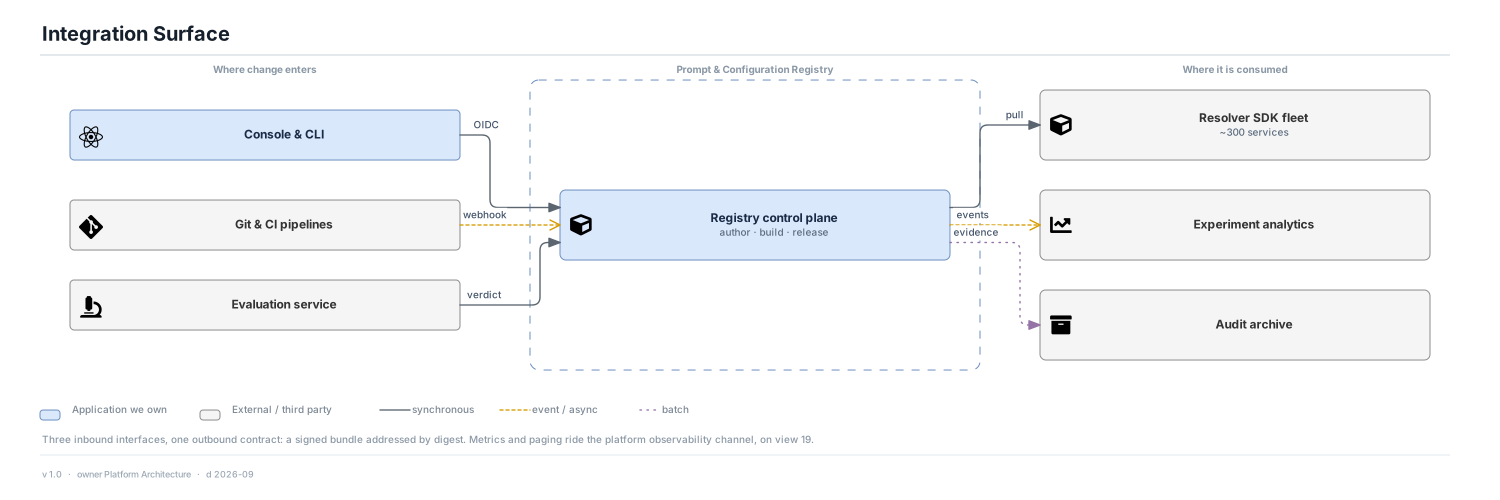
Prompt & Configuration Registry · View 08 of 21 · Structure
The asymmetry is the point
- Inbound interfaces can multiply freely — a console, a CLI, a webhook, a CI publish call, an evaluation verdict — because they all converge on the same build and the same gates.
- Outbound there is exactly one contract: a signed bundle addressed by its digest. Adding a second outbound shape (a query API, a push of rendered prompts) would reintroduce the dependency ADR-01 removes.
- The evaluation service is inbound, not outbound: the registry asks for a verdict about a digest and never streams content to be scored continuously.
Assumptions
- CI publishes from the repository that owns the prompt, so a failing validation fails that team's build rather than appearing later in the registry.
- Paging and chat notices ride the existing observability channel rather than being a registry integration (view 19).
Risks
- Three inbound paths mean three places a version can be created, and only one of them (the console) naturally captures a rationale. The rationale requirement has to be enforced in the build, not in the UI.
- An evaluation service that cannot score a named digest turns the gate into an approximation, and the promotion record starts lying about what was tested.