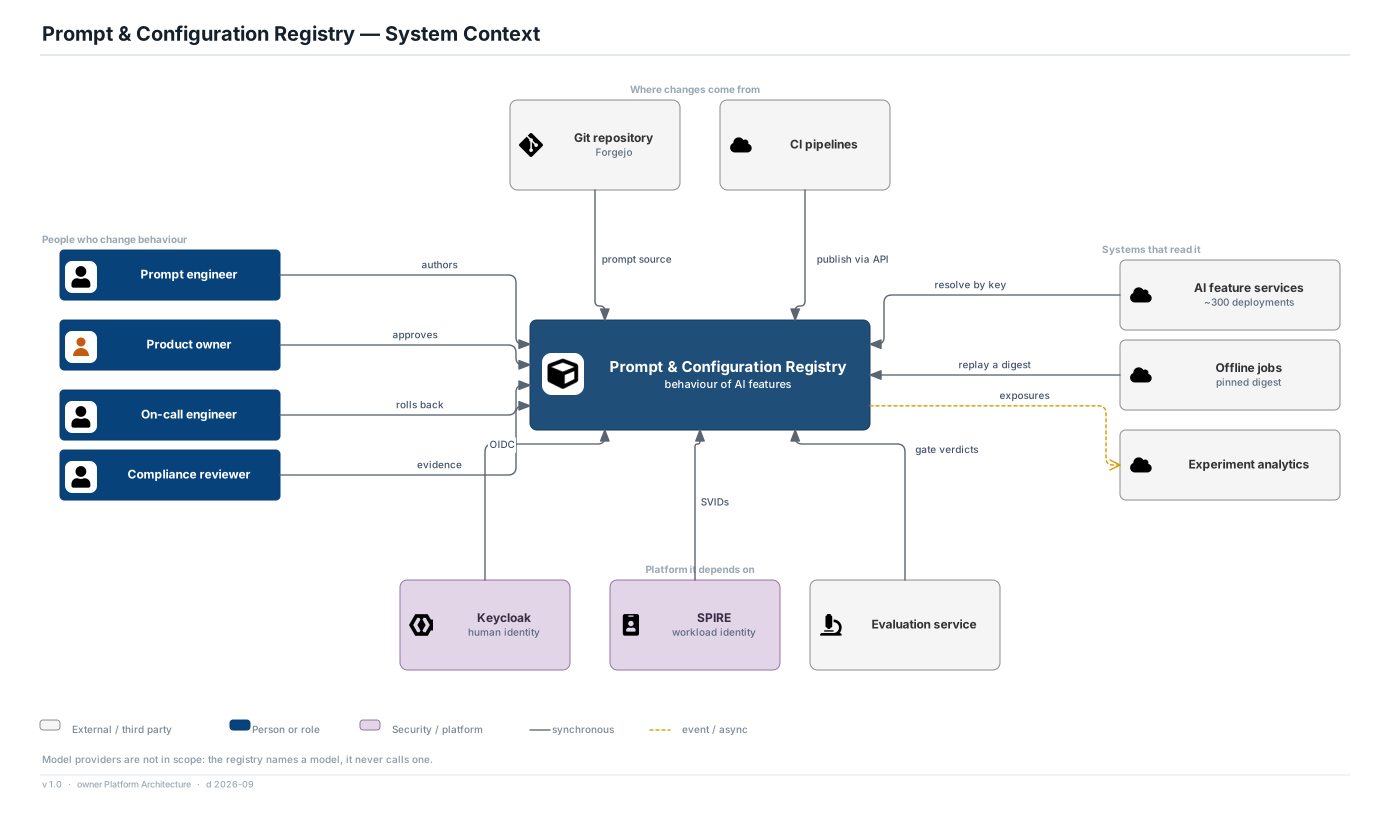
Prompt & Configuration Registry · View 01 of 21 · Context and scope
Decisions
- The registry names a model; it never calls one. Inference, retrieval corpora and the evaluation harness itself are outside the boundary — the registry only consumes an evaluation verdict about a specific digest.
- Consuming services resolve in-process. There is no resolution endpoint on this diagram because there is no resolution service: what crosses the boundary outward is a signed bundle, not an answer.
- Git is an authoring source, not the system of record for what is live. A merge produces a version; only a promotion makes it serve.
Assumptions
- ≈ 300 AI feature deployments, 2,000 configuration keys and 25,000 published versions in year one (ask.md, stated assumption).
- Keycloak and SPIRE already exist as shared platform services; this design consumes them rather than introducing them.
- An evaluation service exists and can be asked for a verdict on a named digest. If it can only score "the latest prompt", the gate in view 13 cannot be built as drawn.
Risks
- The registry becomes a hidden dependency of every AI feature. If resolution ever acquires a network call, the availability of ~300 services becomes the availability of this one — the failure mode the whole design exists to prevent.
- Compliance arrives with a question the exposure store cannot answer, because the answer lives in user content the platform deliberately did not retain (see ADR-14).