Programmable Messaging API · View 22 of 22 · Assurance
Decisions
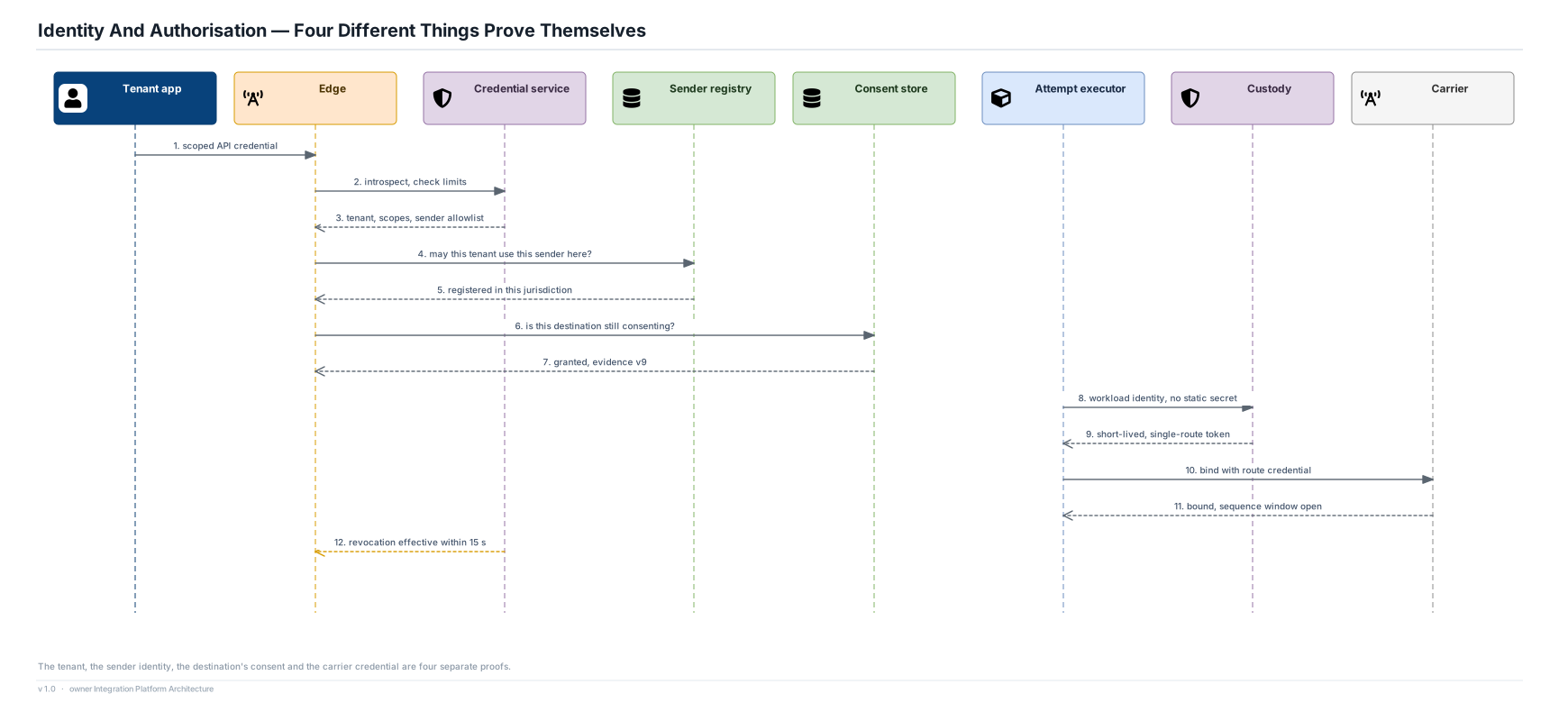
- Authenticating the tenant does not authorise the sender identity, and authorising the sender does not authorise the destination — each is checked separately and recorded separately.
- Executors hold no long-lived carrier material: workload identity is exchanged for a short-lived, single-route token at the custody boundary.
- Credential revocation and tenant suspension are data-plane events with a stated propagation bound, not control-plane state somebody reads later.
Assumptions
- Credential revocation and suspension effective within 15 s; consent, sender and rule changes within 30 s.
- Per-credential rate limits and per-credential sender restriction, so a leaked key is bounded in blast radius as well as in time.
Risks
- Four proofs on the submit path is four dependencies inside a 150 ms p95; any one of them becoming slow makes the platform look unavailable.