Programmable Messaging API · View 06 of 22 · People and journeys
Decisions
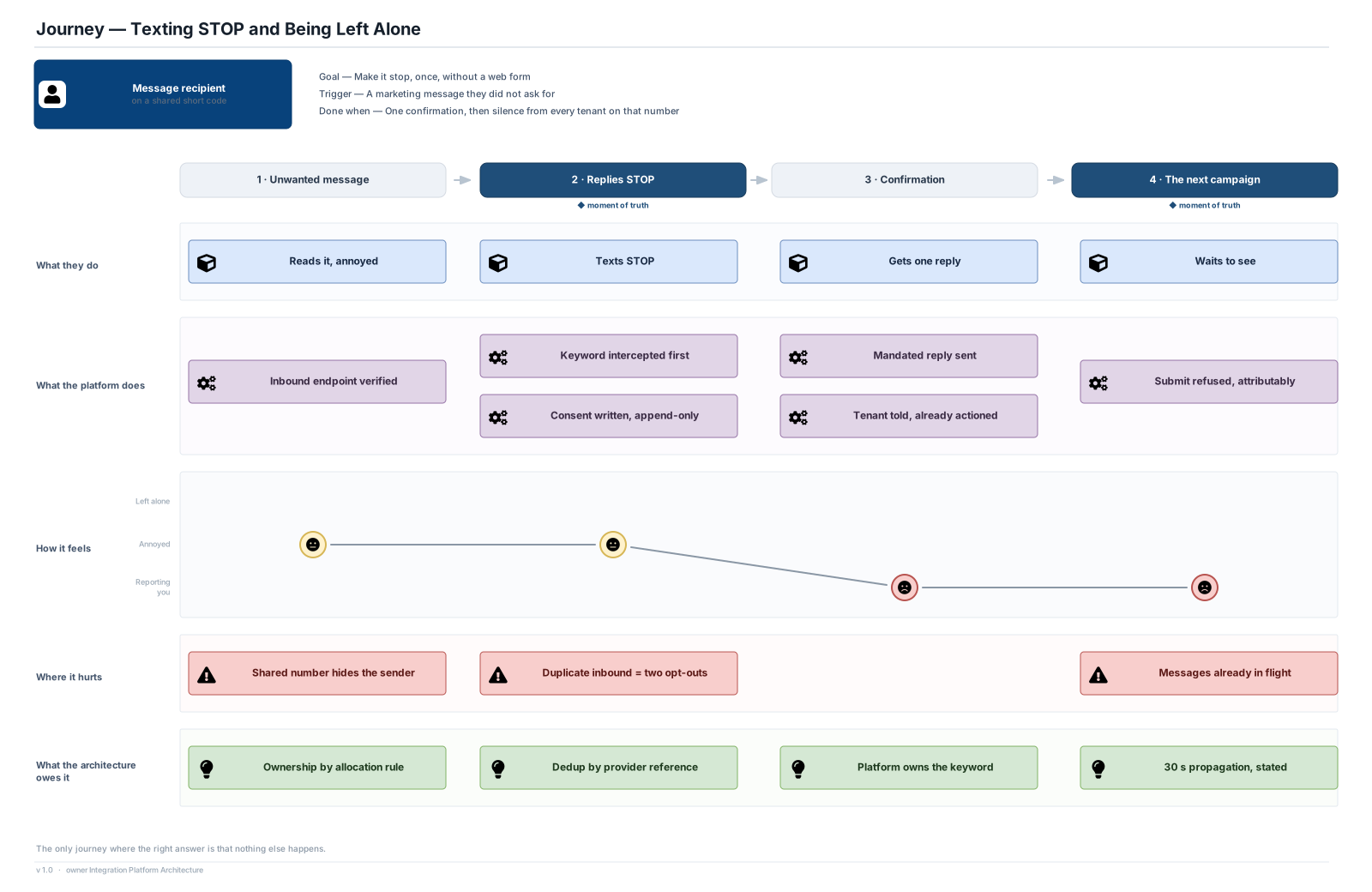
- The platform owns the regulated keyword, not the tenant: STOP is actioned before the tenant is told, and the tenant receives an already-actioned event.
- Consent is an append-only history, so "what did we know when we sent it" is answerable years later.
- On a shared sender identity, ownership is resolved by an explicit allocation rule rather than inferred from conversation history.
Assumptions
- Consent changes are effective in the data plane within 30 s, which is stated rather than hidden.
- Carriers redeliver inbound messages on their own schedule, so inbound dedup is mandatory, not defensive.
Risks
- Messages already accepted and in flight when the STOP lands are the honest gap; the 30 s window is the stated bound on it.
- A duplicated inbound delivery becomes a duplicated tenant action, which for an opt-out means two confirmation messages to someone who asked for none.