Programmable Messaging API  ·  View 03 of 22  ·  People and journeys

Actors and Their Journeys

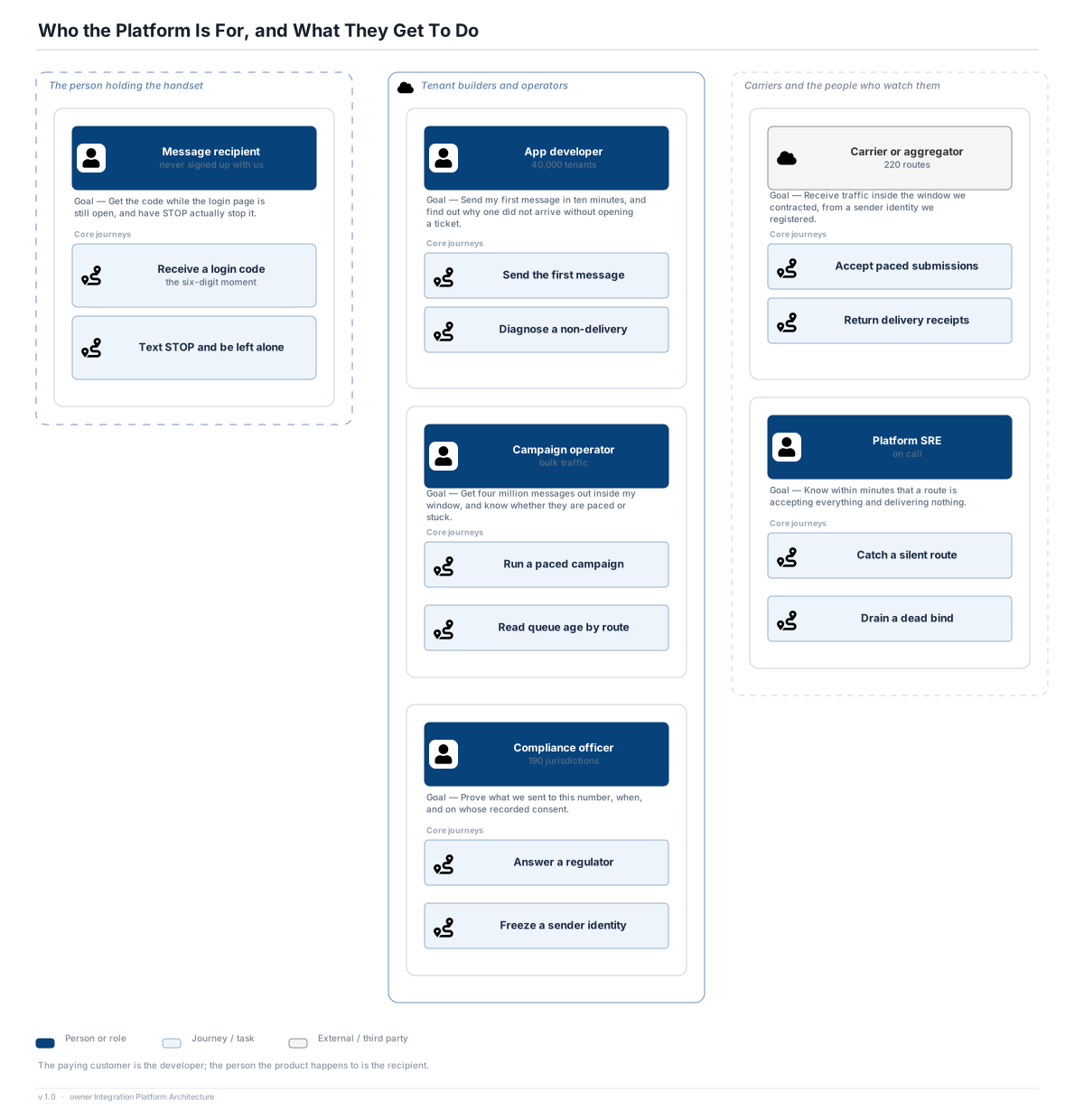
Six actors, and the goal each of them would state in their own words.

Editable source SVG draw.io All views
The person holding the handset Message recipient never signed up with us Goal — Get the code while the login page is still open, and have STOP actually stop it. Core journeys Receive a login code the six-digit moment Text STOP and be left alone Tenant builders and operators App developer 40,000 tenants Goal — Send my first message in ten minutes, and find out why one did not arrive without opening a ticket. Core journeys Send the first message Diagnose a non-delivery Campaign operator bulk traffic Goal — Get four million messages out inside my window, and know whether they are paced or stuck. Core journeys Run a paced campaign Read queue age by route Compliance officer 190 jurisdictions Goal — Prove what we sent to this number, when, and on whose recorded consent. Core journeys Answer a regulator Freeze a sender identity Carriers and the people who watch them Carrier or aggregator 220 routes Goal — Receive traffic inside the window we contracted, from a sender identity we registered. Core journeys Accept paced submissions Return delivery receipts Platform SRE on call Goal — Know within minutes that a route is accepting everything and delivering nothing. Core journeys Catch a silent route Drain a dead bind Who the Platform Is For, and What They Get To Do Person or role Journey / task External / third party The paying customer is the developer; the person the product happens to is the recipient. v 1.0 · owner Integration Platform Architecture

Why this view comes before the structure

  • The recipient never agreed to anything with this platform, which is why consent and opt-out are platform concerns rather than tenant preferences.
  • The developer's worst moment is not a failed send — it is an accepted send they cannot account for, which is the requirement behind the whole attempt trail.
  • The SRE's goal names the failure with no error signal: a route that accepts everything and delivers nothing.

Assumptions

  • The campaign operator and the app developer are usually different people inside the same tenant, with different latency expectations.
  • Carriers are modelled as actors, not just systems: they have goals the platform must satisfy or lose the route.

Risks

  • The compliance officer's needs are easy to defer and expensive to retrofit: evidence has to be captured at submit, not reconstructed later.