Programmable Messaging API · View 01 of 22 · Context and scope
Decisions
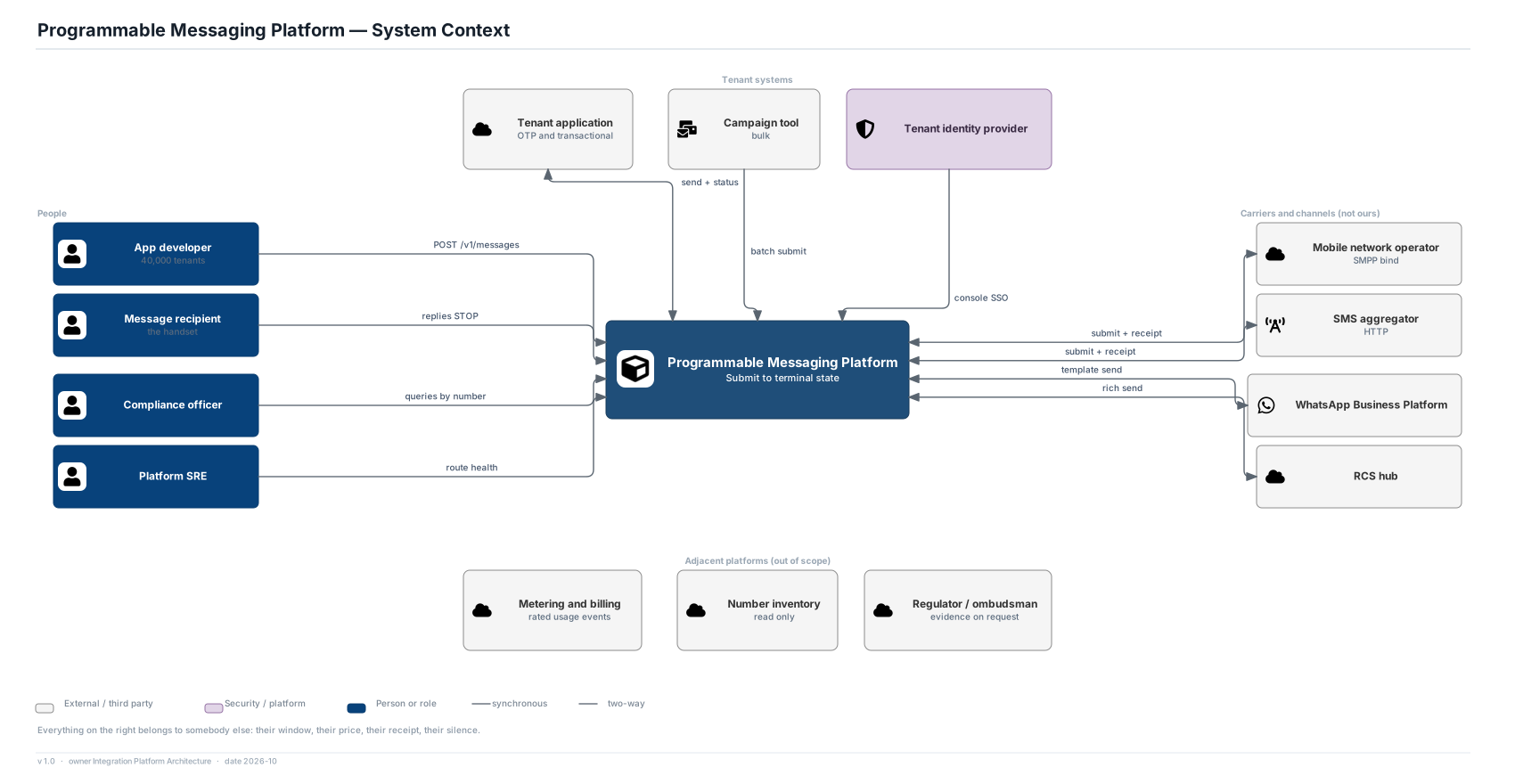
- The boundary is drawn at the carrier, not at the handset: the platform's commitment ends at a recorded outcome, which is why "unknown" has to be a product-visible state.
- The paying customer (the developer) and the person the product happens to (the recipient) are different actors with different failure modes, so both are in the context.
- Metering and invoicing sit outside: this platform's output is a rated usage event per attempt, and nothing downstream of it.
Assumptions
- 40,000 active tenants across 190 jurisdictions, 9 channels and roughly 220 carrier or aggregator routes.
- Phone-number inventory is an existing system the platform reads; provisioning is not in scope.
- Regulators and ombudsmen request evidence occasionally rather than continuously, so evidence export is a batch path.
Risks
- Every interesting dependency is on the right-hand side, with its own window, price, auth, outage and regulator.
- A jurisdiction with one viable route is a single point of failure the platform cannot engineer away, only report.