No-Code SaaS Automation Platform · View 21 of 21 · Assurance
What the fourth column is for
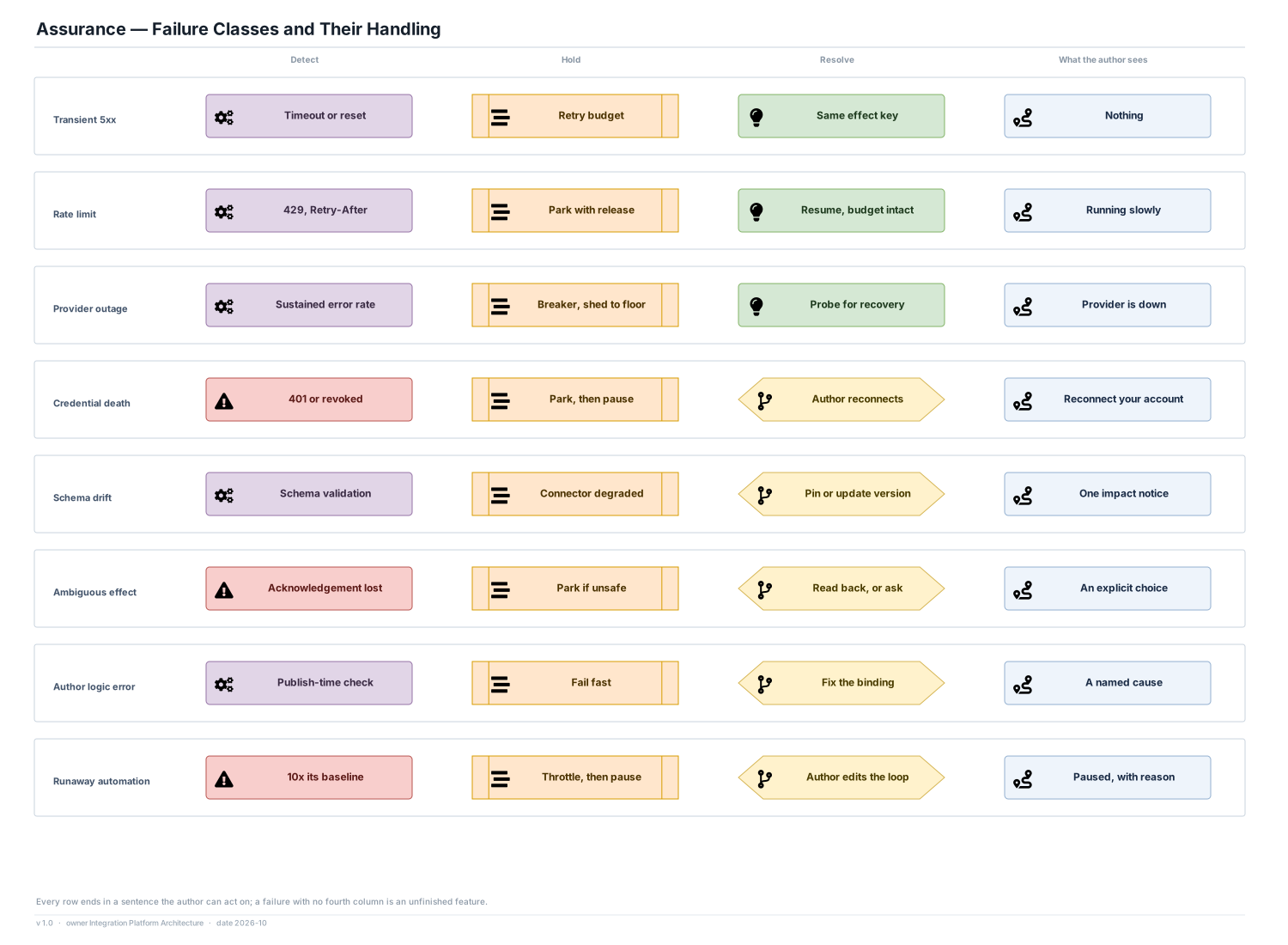
- A failure class with no author-facing sentence is an unfinished feature, not a support ticket. The fourth column is the acceptance test for every row.
- Three rows resolve with the author doing nothing, and that is the point: transient errors, rate limits and provider outages are the platform's problem and should not reach a human who cannot act on them.
- The two rows that end in a decision — credential death and the ambiguous effect — are the only ones where the platform genuinely cannot act alone, and both are escalated explicitly rather than guessed.
Assumptions
- Rate limiting and credential death are continuous background events at 2.5 M workspaces, not incidents.
- Author logic error is the single largest failure class by volume, which is why publish-time validation (view 04) is a gate rather than a warning.
- Provider outages lasting hours occur several times a year per provider.
Not covered here
- Worker loss, store loss and platform quota exhaustion are in the requirement's taxonomy but resolve structurally — through the ledger resume, synchronous replication and fair-share allocation — rather than through a detect-hold-resolve path, so they appear in views 07, 10 and 15 instead.