No-Code SaaS Automation Platform · View 12 of 21 · Runtime
What this view proves
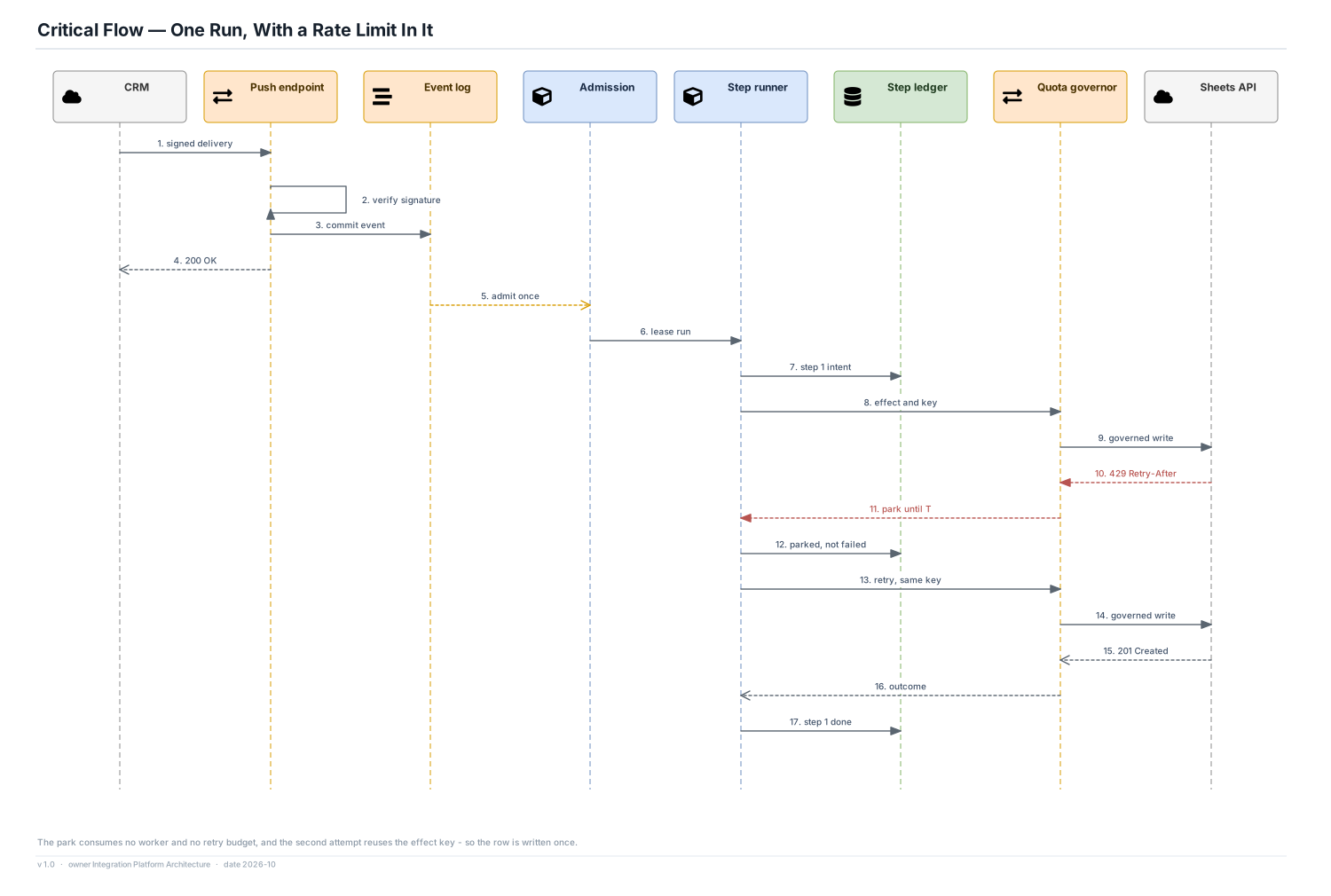
- The push endpoint acknowledges the provider after the durable commit and before any execution — which is how a p99 250 ms acknowledgement fits inside every common provider delivery timeout while the run itself may take minutes.
- The rate limit is a park, not a failure: it writes a ledger entry, consumes no worker, and does not spend the step's retry budget.
- The second attempt reuses the same effect key, so the row is written once. Without the key this diagram would have to show a duplicate or a gap.
Assumptions
- Sheets-class actions are in the idempotent class. For a checkable action the park would be followed by a read-back, and for an unsafe one by a prompt to the author — view 14 draws all three.
- Push-triggered first step begins within p95 3 s of acknowledgement.
Risks
- Two synchronously replicated ledger writes per step is the platform's primary scaling constraint at 12,000 steps/second, and the cost the critical design decision knowingly buys.