No-Code SaaS Automation Platform · View 08 of 21 · Structure
Decisions
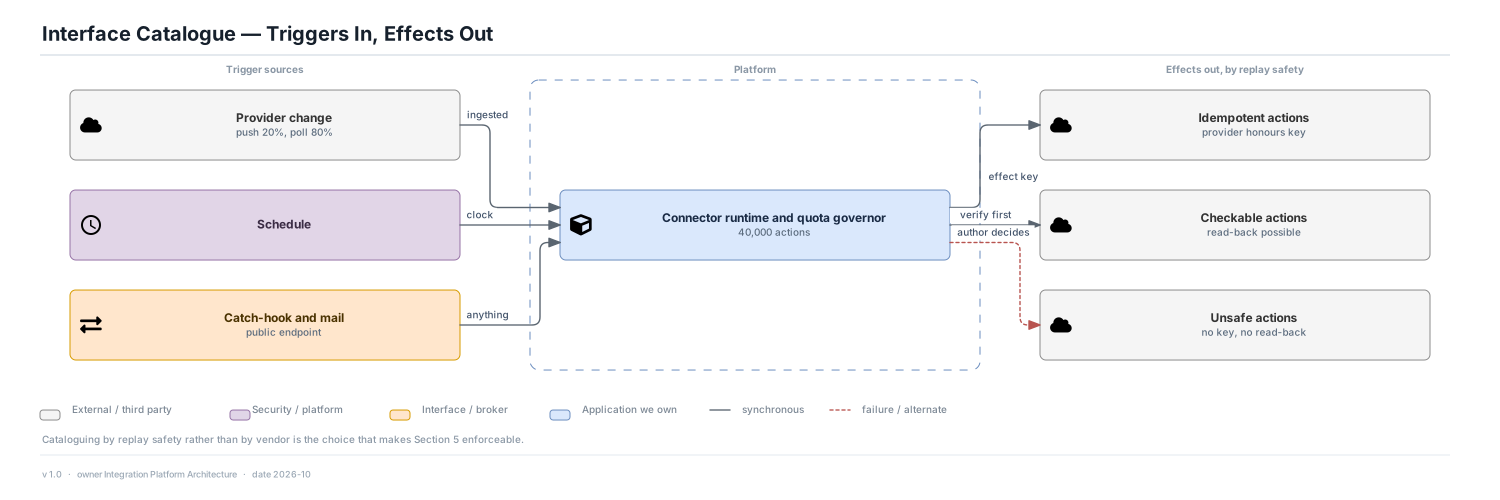
- The catalogue is organised by replay safety rather than by vendor. A vendor list is an inventory; this grouping is the thing every execution guarantee downstream is derived from.
- An action cannot be published without its class (view 16 makes that a release gate), so the third column can never be silently empty.
- Catch-hooks and platform-hosted mail addresses are first-class inbound interfaces, which means they are public endpoints with per-connection secrets and their own rate limits.
Assumptions
- 40,000 published actions and triggers across 8,000 connectors.
- The unsafe class is a material fraction, not an edge case — 'post this message' and 'send this email' are among the most-used actions in the product.
Open
- Core Architecture Question 3: whether the unsafe-class behaviour is one platform-wide policy or an authored per-action product decision. This view assumes the latter, which is why the class is a manifest field.