No-Code SaaS Automation Platform  ·  View 04 of 21  ·  People and journeys

Journey — Building the First Automation

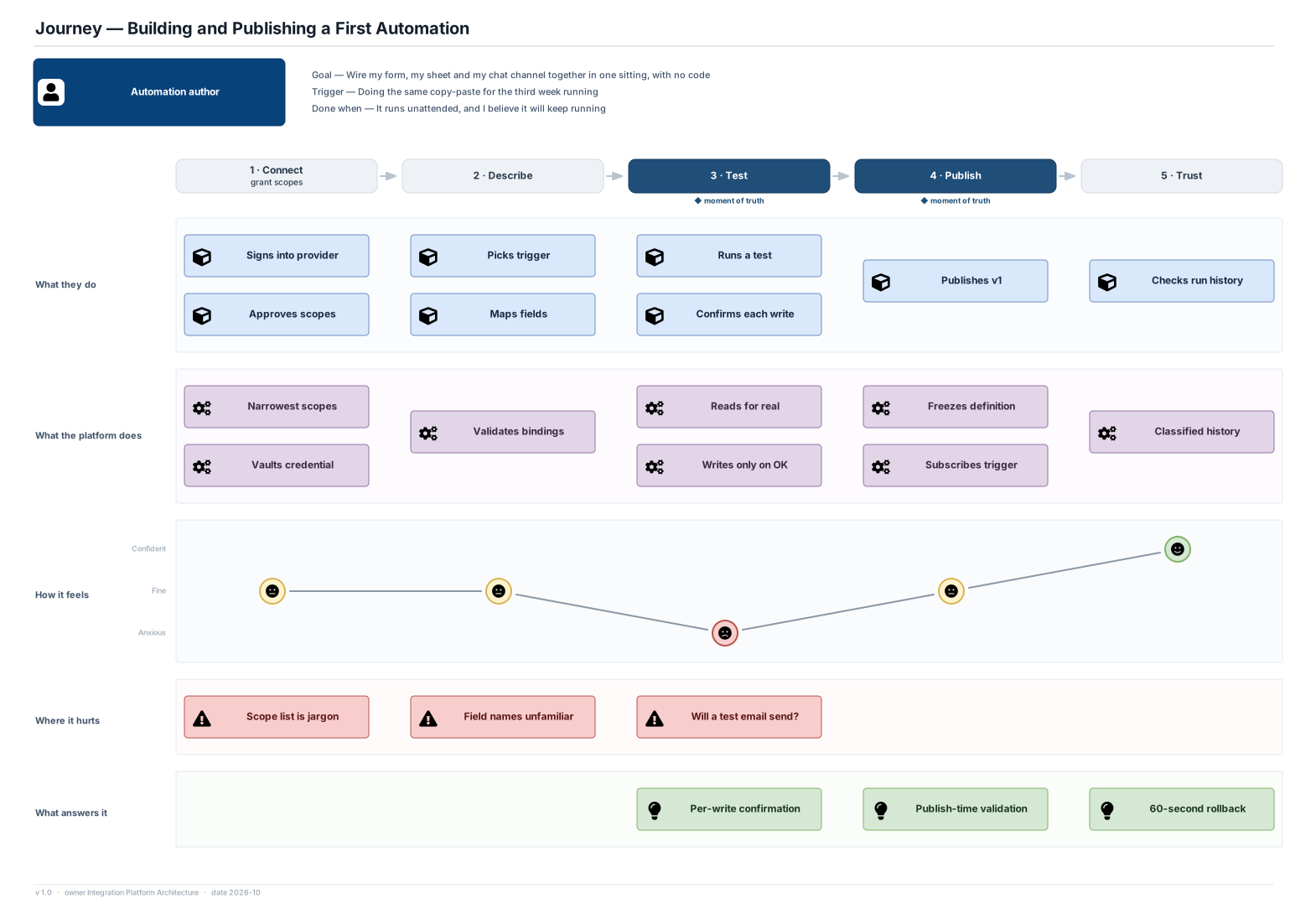
The happy path, and the one phase where the author is genuinely frightened of the product.

Editable source SVG draw.io All views
Automation author Goal — Wire my form, my sheet and my chat channel together in one sitting, with no code Trigger — Doing the same copy-paste for the third week running Done when — It runs unattended, and I believe it will keep running 1 · Connect grant scopes 2 · Describe 3 · Test ◆ moment of truth 4 · Publish ◆ moment of truth 5 · Trust What they do Signs into provider Approves scopes Picks trigger Maps fields Runs a test Confirms each write Publishes v1 Checks run history What the platform does Narrowest scopes Vaults credential Validates bindings Reads for real Writes only on OK Freezes definition Subscribes trigger Classified history How it feels Confident Fine Anxious Where it hurts Scope list is jargon Field names unfamiliar Will a test email send? What answers it Per-write confirmation Publish-time validation 60-second rollback Journey — Building and Publishing a First Automation v 1.0 · owner Integration Platform Architecture · date 2026-10

What the map found

  • The trough is Test, not Publish. The author is asked to prove an automation works by letting it do real things to real data, and nothing else in the journey carries that risk.
  • The answer is structural, not cosmetic: a test run executes read-only steps for real and requires per-write confirmation, which is why Section 2 makes it a requirement rather than a UI nicety.

Where the architecture answers it

  • Per-write confirmation in the test run (Section 2) — the Test phase.
  • Publish-time validation that refuses a definition which would fail on its first run for a knowable reason — the Publish phase.
  • 60-second rollback as a pointer move, so Publish stops being a one-way door — the Trust phase.

Assumptions

  • The author completes this in one sitting and will not return to finish it later, so an abandoned draft is a lost automation.
  • Scope names come from the provider and are jargon we cannot rewrite, only explain.