Multiplayer Collaborative Canvas  ·  View 18 of 23  ·  Operations

Observability

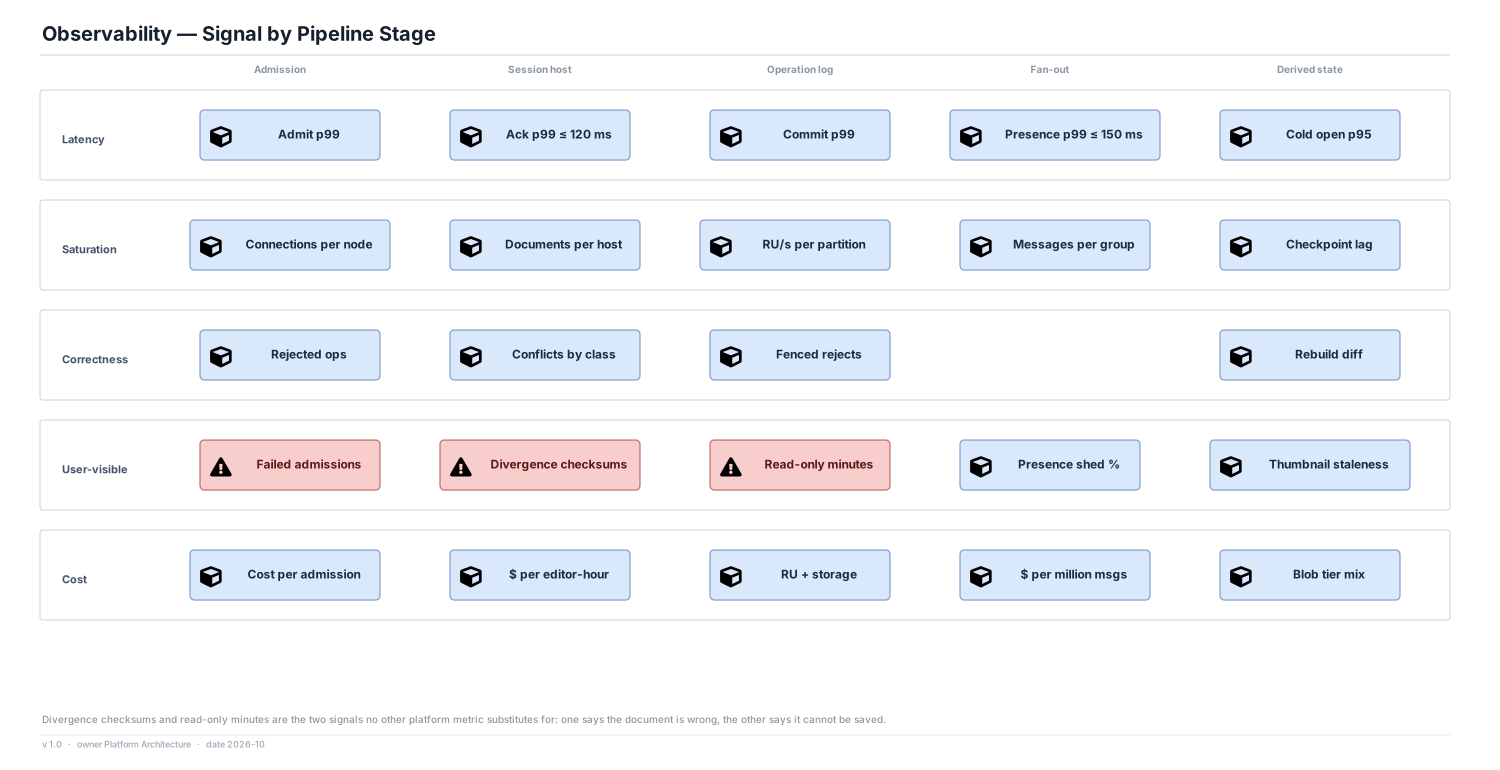
Five signal classes across five stages, and the two numbers nothing else substitutes for.

Editable source SVG draw.io All views
Admission Session host Operation log Fan-out Derived state Latency Admit p99 Ack p99 ≤ 120 ms Commit p99 Presence p99 ≤ 150 ms Cold open p95 Saturation Connections per node Documents per host RU/s per partition Messages per group Checkpoint lag Correctness Rejected ops Conflicts by class Fenced rejects Rebuild diff User-visible Failed admissions Divergence checksums Read-only minutes Presence shed % Thumbnail staleness Cost Cost per admission $ per editor-hour RU + storage $ per million msgs Blob tier mix Observability — Signal by Pipeline Stage Divergence checksums and read-only minutes are the two signals no other platform metric substitutes for: one says the document is wrong, the other says it cannot be saved. v 1.0 · owner Platform Architecture · date 2026-10

The two that matter most

  • Divergence checksums: clients periodically report a hash of their document state at a known sequence number, and a mismatch is an alert within 60 s. Without it, divergence is discovered by a user noticing their file is wrong (ADR-17).
  • Read-only minutes: how long documents could not be saved. It is the honest form of the edit-path availability target, and it is a user-visible number rather than an internal one.

Decisions

  • Cost is a signal row, not a monthly report: dollars per active editor-hour is attributed per document and per tenant so a change in presence policy is visible the same day (ADR-07).
  • Conflicts are counted by class. A sudden rise in edit-after-delete says a client build is misbehaving long before anyone files a bug.

Assumptions

  • Checksum reporting adds ≤ 1% to client message volume.
  • Azure Monitor with managed Prometheus and Grafana; metadata only — no document content leaves the document plane.