Multiplayer Collaborative Canvas · View 15 of 23 · Runtime
The decision this view exists for
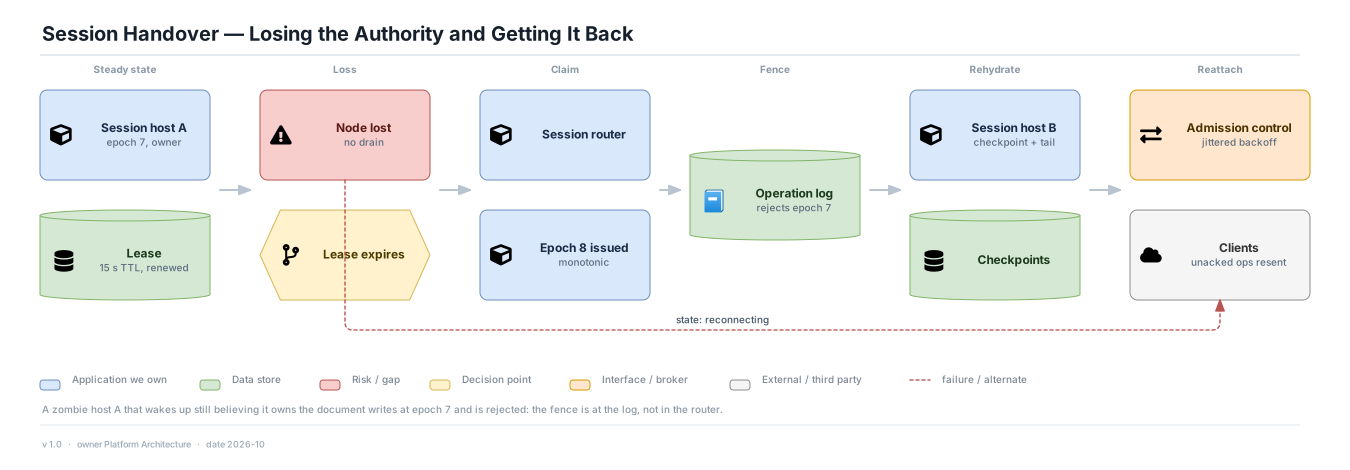
- Ownership is a lease with a monotonic epoch, and the fence is enforced by the log's conditional write — not by the router, not by orchestration. A host that wakes up still believing it owns the document writes at the old epoch and is rejected (ADR-03).
- That makes a brief double-ownership harmless rather than catastrophic, which is what allows a 15 s lease instead of a consensus round on every operation.
- Clients resend unacknowledged operations after reattaching. Because operations are idempotent on (document, client op id), a resend after a handover is safe.
Numbers
- Lease TTL 15 s, renewed every 5 s; re-host RTO p95 10 s including client reattach.
- Loss bounded to operations that were never acknowledged — RPO 0 for everything the client was told was safe.
- All stated assumptions.
Risks
- A lease store outage stops handover. The platform's answer is to fail closed on saving (documents go read-only) rather than permit two authorities, because a split document cannot be repaired after the fact.