Model Evaluation Service  ·  View 17 of 21  ·  Operations

Release Pipeline

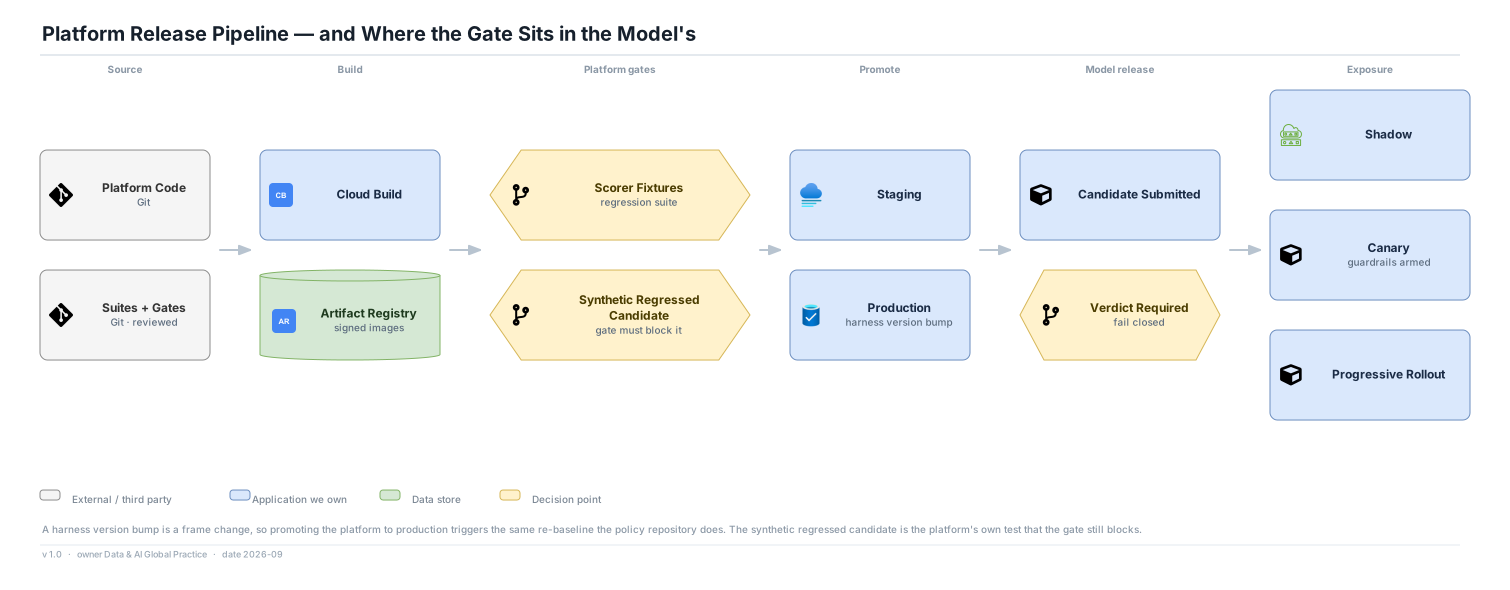
How the platform ships itself, and where its verdict sits in the model's own release.

Editable source SVG draw.io All views
Source Platform Code Git Suites + Gates Git · reviewed Build Cloud Build Artifact Registry signed images Platform gates Scorer Fixtures regression suite Synthetic Regressed Candidate gate must block it Promote Staging Production harness version bump Model release Candidate Submitted Verdict Required fail closed Exposure Shadow Canary guardrails armed Progressive Rollout Platform Release Pipeline — and Where the Gate Sits in the Model's External / third party Application we own Data store Decision point A harness version bump is a frame change, so promoting the platform to production triggers the same re-baseline the policy repository does. The synthetic regressed candidate is the platform's own test that the gate still blocks. v 1.0 · owner Data & AI Global Practice · date 2026-09

Decisions

  • A harness version bump is a frame change, so promoting the platform triggers the same re-baseline a rubric edit does.
  • A synthetic deliberately-regressed candidate runs on every platform release. A gate that has never blocked anything is not known to work.
  • Scorer fixtures are a regression suite for the scorers themselves — a scorer defect returns a plausible wrong number, which is the hardest failure to notice.

Fail closed

  • A pipeline that cannot reach the gate does not proceed. Shipping unevaluated to 40 million users is worse than a delayed release, and there is no bypass an outage can trigger.

Assumption

  • Platform releases are infrequent relative to candidates, so re-baseline cost from harness bumps is a small share of the budget.