LinkedIn Professional Network · View 19 of 30 · 5 · Runtime
Decisions
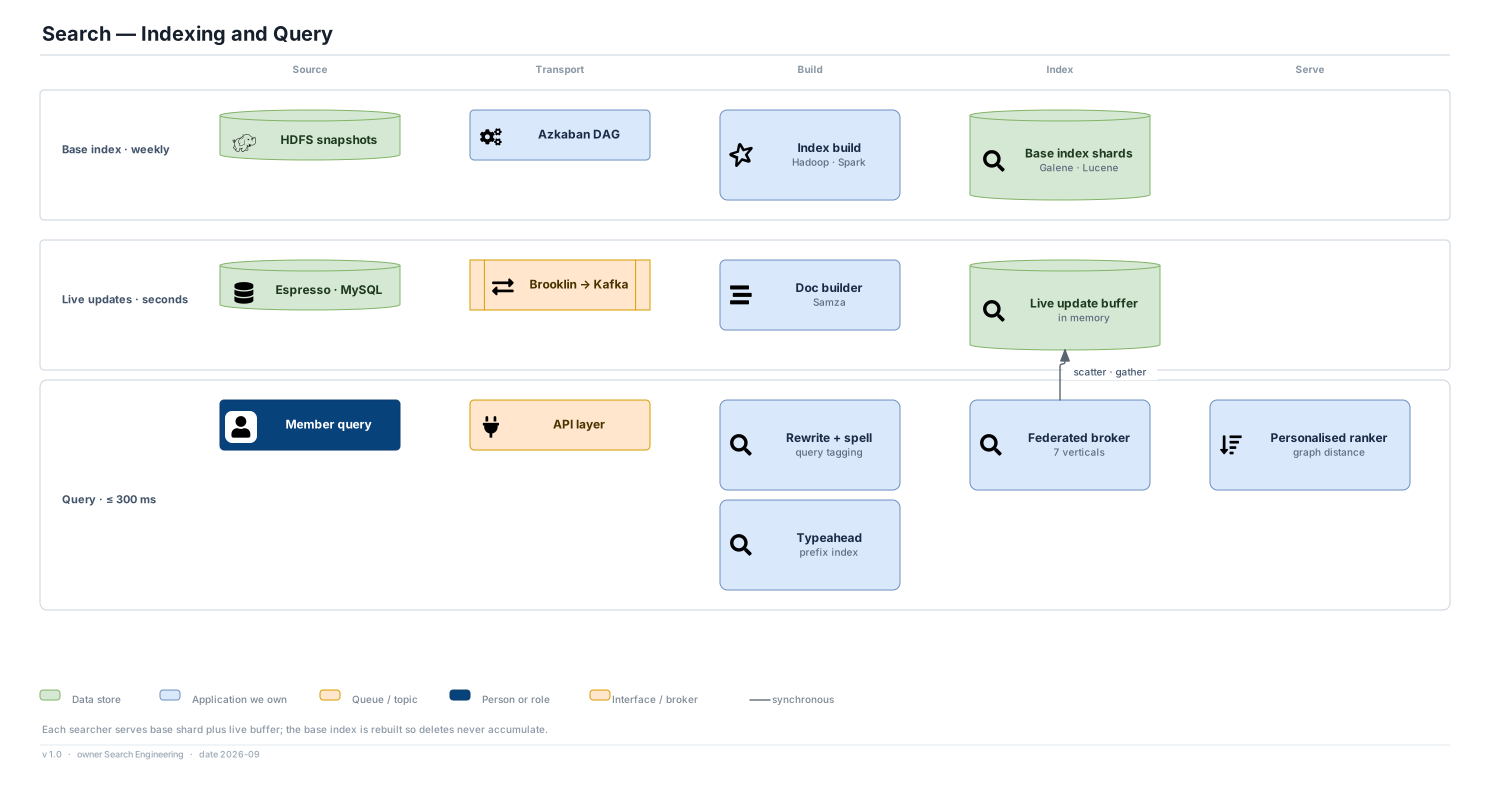
- Galene, on Lucene: a base index rebuilt offline plus an in-memory live buffer fed by change capture. Each rebuild purges deleted documents and rebalances shards
- One federated broker queries seven verticals (people, jobs, companies, posts, groups, schools, skills) and blends them by query intent
- Personalisation uses graph distance: a second-degree connection outranks a stranger with the same name
Numbers
- Search p95 under 300 ms; typeahead under 100 ms (assumed)
- Indexing is eventually consistent, within seconds; the base index is rebuilt weekly (LinkedIn, 2014)
- Semantic job search now adds embedding-based retrieval on GPUs (LinkedIn, 2025)
Risks
- Privacy must be enforced twice: opted-out profiles are never indexed, and viewer-dependent visibility is checked at query time
- If Galene is down, search degrades. Profile, feed and apply never call it