LinkedIn Professional Network · View 11 of 30 · 4 · Data
Why three tiers
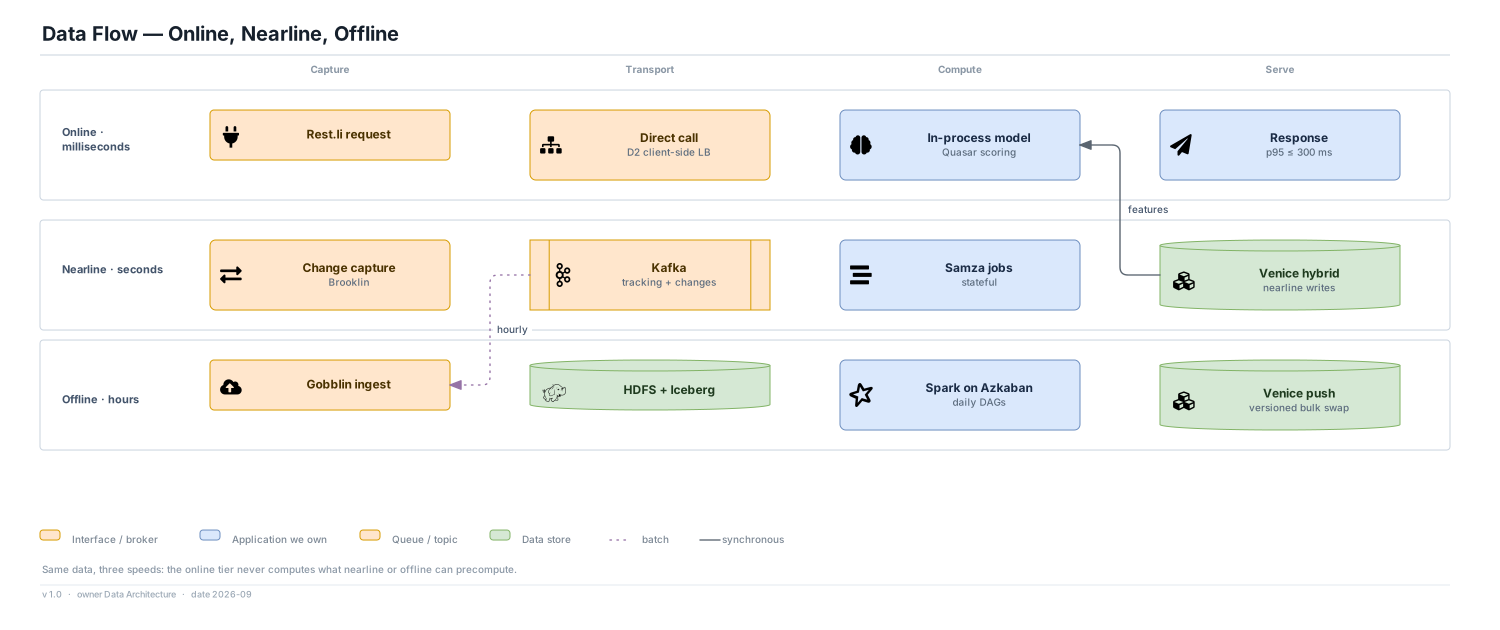
- Online answers in milliseconds but can only look things up. Offline can compute anything but is hours stale. Nearline sits between, seconds stale with bounded compute
- Each result is computed in the cheapest tier that meets its freshness need: People You May Know offline, feed features nearline, privacy online
- Venice unifies the output: batch pushes and nearline writes land in the store the online tier reads
Published numbers
- Venice: 200+ hybrid datasets with nearline writes; about 500 Voldemort read-only stores migrated by 2018 (LinkedIn, 2022)
- Galene: base index rebuilt offline, e.g. weekly, with live updates in seconds (LinkedIn, 2014)
Risks
- Two paths computing the same feature can disagree (training/serving skew). Feathr defines a feature once for both
- A late batch push can overwrite fresher nearline data; hybrid stores order the two by version