Distributed Job Scheduler · View 17 of 20 · Operations
Decisions
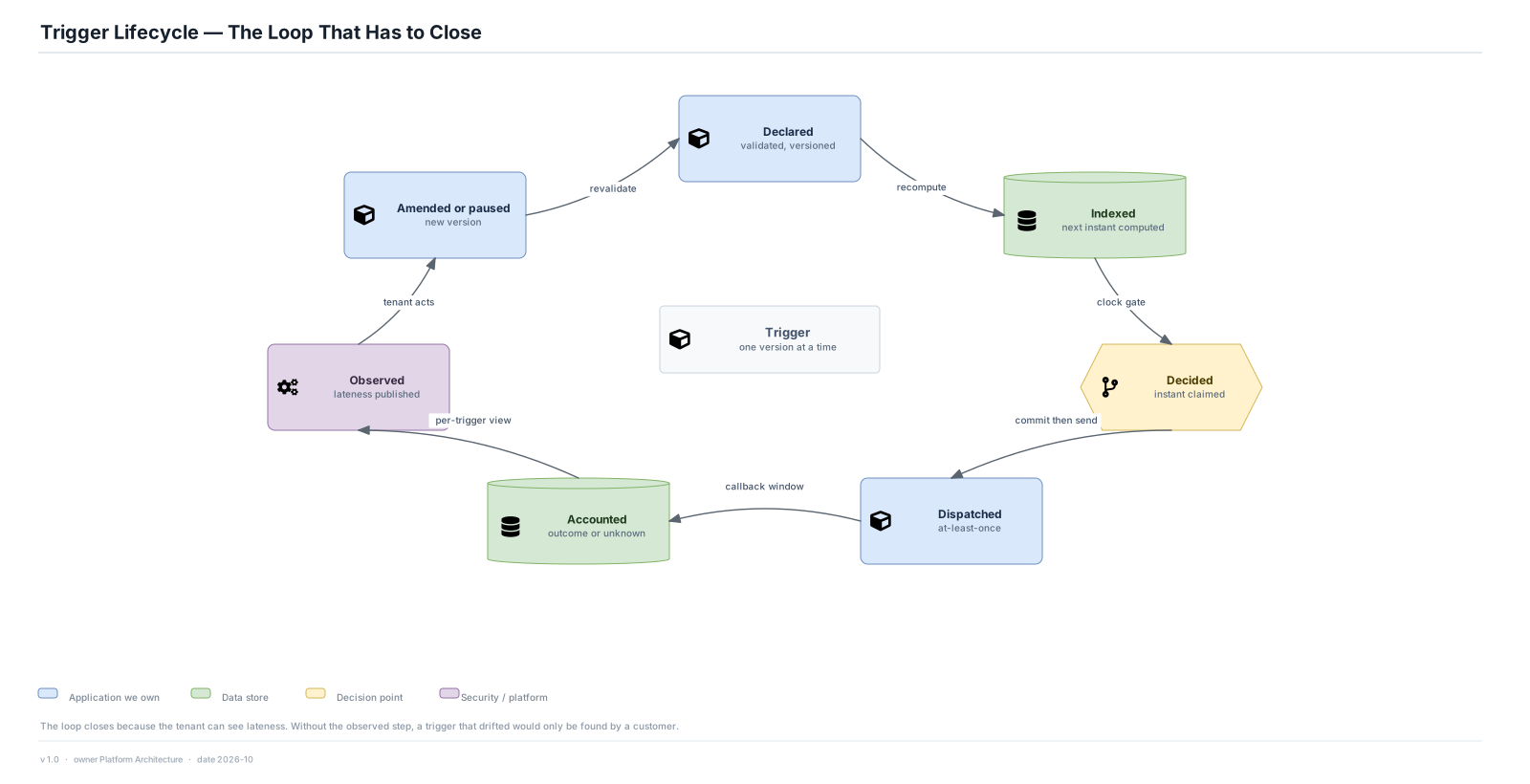
- The observed step is on the ring, not beside it. Without a tenant-visible lateness view, a trigger that has drifted is only found by a customer (ADR-13).
- An amendment revalidates rather than mutates: a new version re-enters the loop at declared, so the next instant is recomputed under the new rules (ADR-05).
- Accounted includes unknown as a terminal state, so the loop closes even when the executor never answers (ADR-12).
Assumptions
- A callback window short enough that overlap control can treat unknown as finished without routinely allowing concurrent execution — the choice Question 6 in the ask leaves open.
Risks
- The loop assumes the tenant looks. A per-trigger lateness view nobody opens is the same as no view, which is why the tenant-facing alert in view 05 matters more than the dashboard.