Incident Management Platform · View 20 of 34 · 5 · Runtime
Decisions
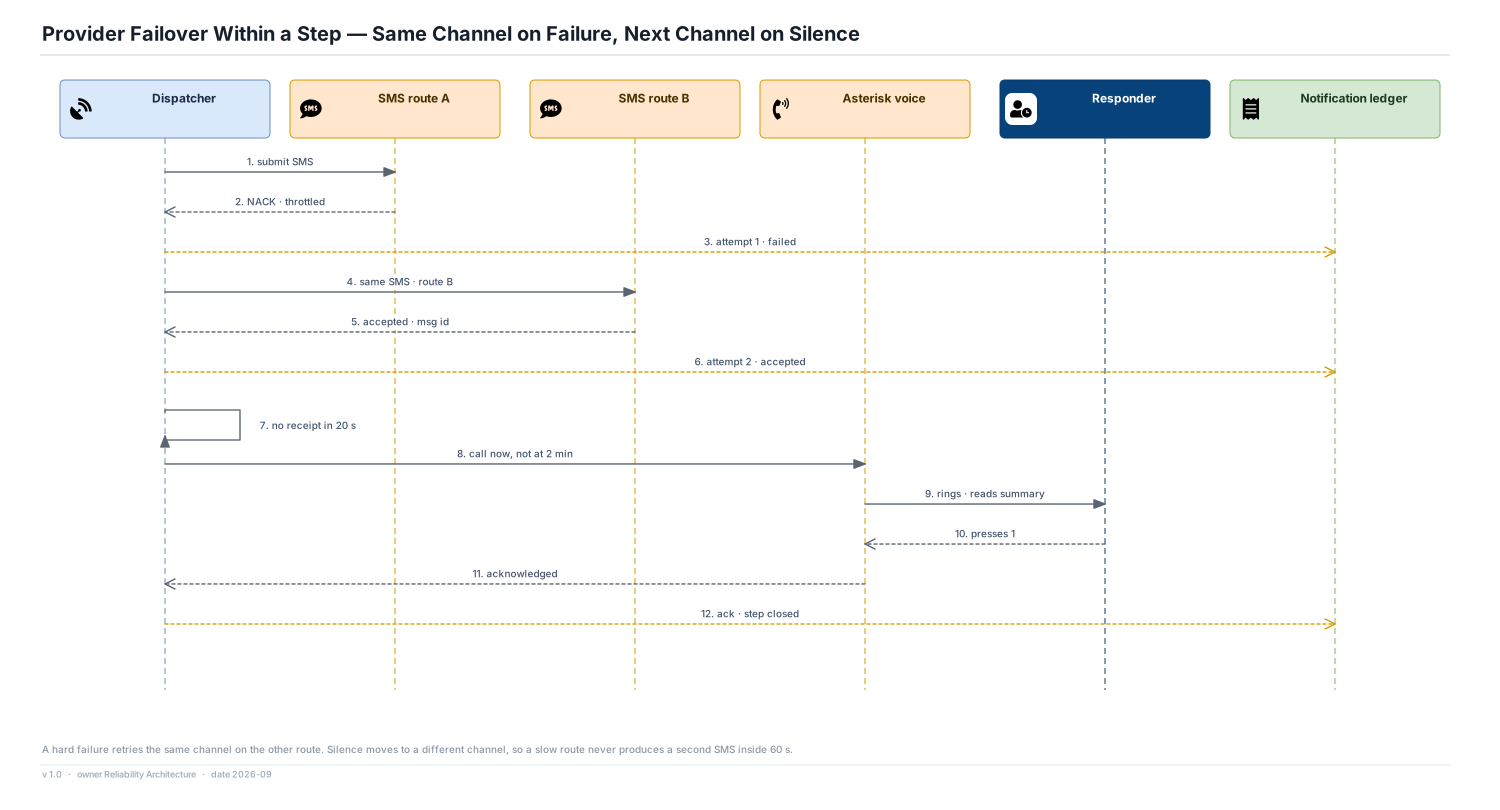
- A hard failure, a NACK, a throttle or a refused connection, retries the same channel on the other route at once. The first message verifiably did not leave, so the retry cannot produce a duplicate.
- Silence, an accepted message with no delivery receipt inside the channel's latency threshold, moves to the next channel rather than the other route. A slow route might still deliver, and a second SMS from route B would be the duplicate the 60-second rule forbids. A call is not a duplicate of an SMS (ADR-21).
- Neither case advances the escalation step. Only the step timer does, because only a missing acknowledgement proves no human saw the page (ADR-16).
Thresholds
- SMS receipt: 20 s. Voice: ringing within 10 s of originate. Push: accepted by APNs or FCM within 3 s. Route health is measured continuously by loopback traffic, so a degraded route is demoted before a real page tries it.
Risks
- Delivery receipts are unreliable in both directions: some carriers report delivered on hand-off to the next network, some never report at all. The design never escalates on a receipt and never stops on one.