Incident Management Platform · View 17 of 34 · 4 · Data
Decisions
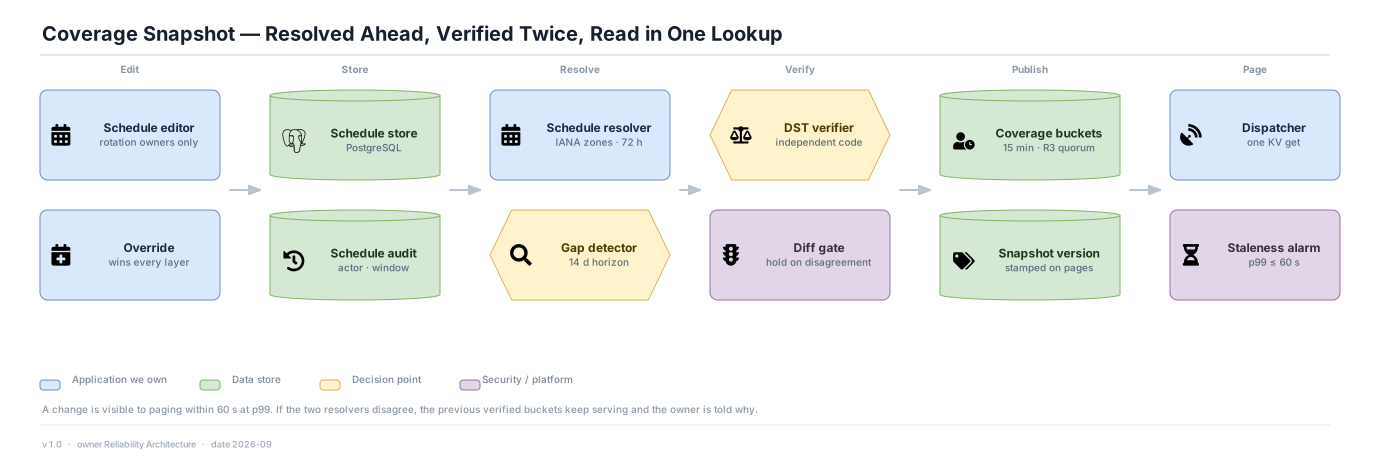
- The resolver materialises 72 hours ahead, three times the requirement's 60 minutes. A control-plane outage of up to three days leaves paging with correct, pre-verified coverage; beyond that the last buckets keep serving and staleness pages the platform team (ADR-14).
- Every change re-resolves only the affected rotation and publishes with a version. Pages record the snapshot version they used, so 'who did we page and why' is answerable even when the schedule has since changed.
- A disagreement between the resolver and the independent verifier holds the previous verified buckets and tells the rotation owner. It does not publish the newer answer and hope.
Targets
- Snapshot staleness after an edit: p99 ≤ 60 s. Coverage lookup: one key read, independent of layering depth. Gap detection horizon: 14 days, evaluated hourly.
Risks
- A timezone database update from upstream can change future instants for a rotation. tzdata is pinned per release and a new version is rolled out like code, with the verifier comparing old and new resolutions for the next 14 days.