Incident Management Platform  ·  View 07 of 34  ·  2 · People and journeys

Journey — A Service Owner Turns a SEV2 Into Fixed Conditions

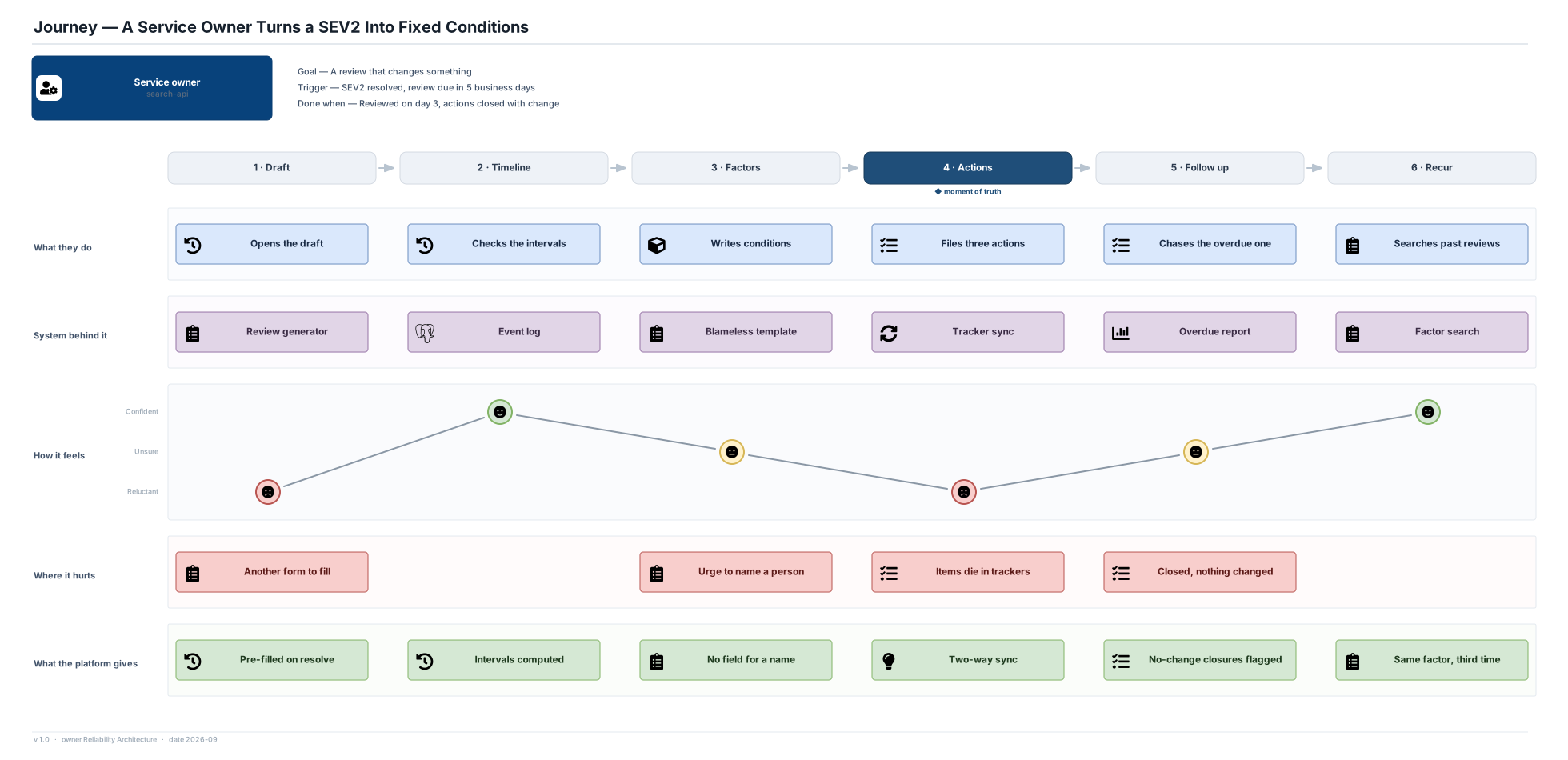
The review is where the platform either reduces next quarter's pages or produces paperwork. The trough is the action items, which is where most review programmes quietly die.

Editable source SVG draw.io All views
Service owner search-api Goal — A review that changes something Trigger — SEV2 resolved, review due in 5 business days Done when — Reviewed on day 3, actions closed with change 1 · Draft 2 · Timeline 3 · Factors 4 · Actions ◆ moment of truth 5 · Follow up 6 · Recur What they do Opens the draft Checks the intervals Writes conditions Files three actions Chases the overdue one Searches past reviews System behind it Review generator Event log Blameless template Tracker sync Overdue report Factor search How it feels Confident Unsure Reluctant Where it hurts Another form to fill Urge to name a person Items die in trackers Closed, nothing changed What the platform gives Pre-filled on resolve Intervals computed No field for a name Two-way sync No-change closures flagged Same factor, third time Journey — A Service Owner Turns a SEV2 Into Fixed Conditions v 1.0 · owner Reliability Architecture · date 2026-09

The moment of truth

  • Filing actions into a tracker that nobody on the platform side can see. Here action items are first-class objects synchronised both ways, and an item closed with no linked change is reported as exactly that.
  • The urge to write a name in the contributing factors. The template has no field for it (ADR-25). A review that blames a person teaches everyone else to hide the next near miss.

Decisions it relies on

  • The draft is generated on resolution with time to detect, acknowledge, mitigate and resolve computed from the event log, so the owner starts from facts rather than memory.
  • Contributing factors come from a controlled vocabulary with free text beside it, which is what makes the third occurrence of the same factor findable.

Target

  • SEV1 and SEV2 reviews completed within 5 business days, escalated to the owning team's management layer when overdue, as a notification rather than a page.