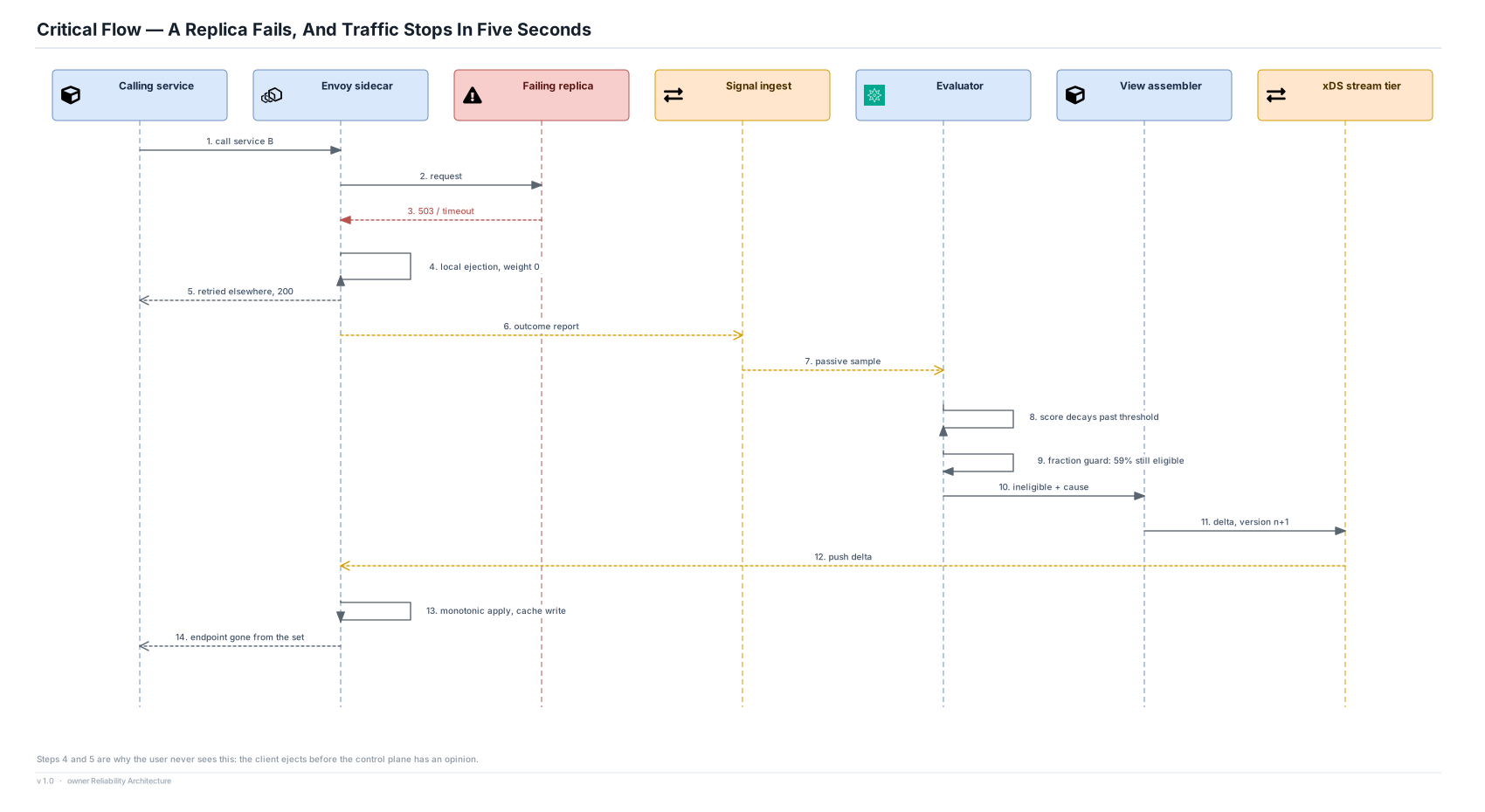
Health Check & Service Discovery · View 13 of 21 · Runtime
What this flow proves
- The client ejects and retries before the control plane has an opinion. Local ejection is the first line, not a backstop.
- The fraction guard is consulted on every removal, including this one — 59% still eligible is why the removal is allowed to proceed.
- The delta carries the new version, and the client applies it monotonically and writes it to disk before acknowledging it.
Assumptions
- 5 s to 99% of callers, 15 s to 99.9%, measured from the first failed request rather than from the decision.
- Local ejection caps the fraction of a set any one client may remove, so one bad caller cannot drain a healthy service.
Risks
- Between steps 3 and 12 other callers are still sending to the failing replica. The 5-second budget is the real measure of that exposure.