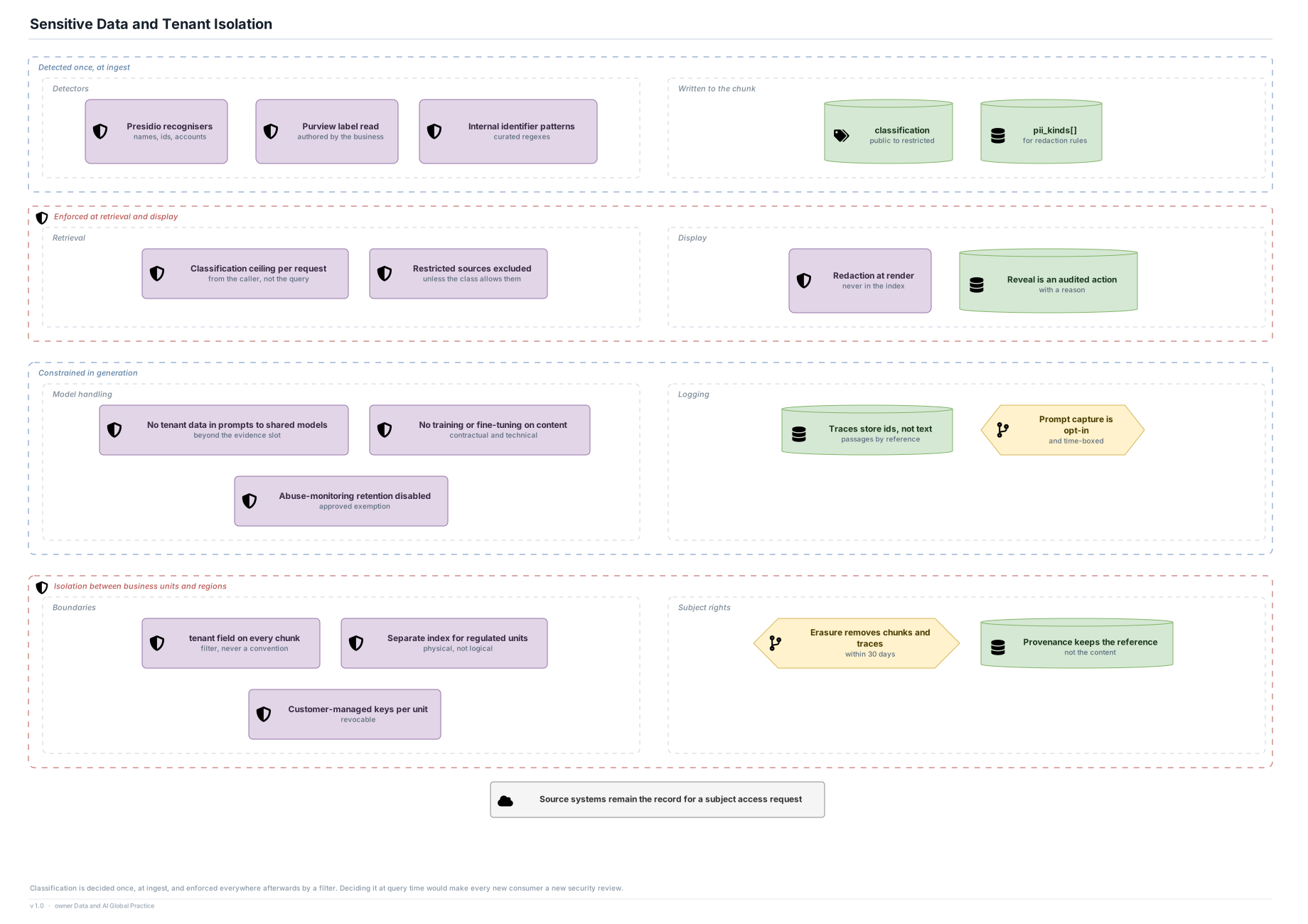
Enterprise Generative Search — Azure and Open Source · View 39 of 41 · Assurance
Decisions
- Classification is decided once, at ingest, and written onto the chunk. Deciding it at query time would make every new consumer a new security review, and would put a model in the path of a security decision.
- Redaction happens at render, never in the index. Redacting at index time destroys retrievability for people who are entitled to see the content.
- Traces store identifiers rather than passage text. Otherwise the trace store becomes a second copy of the corpus with different permissions and a different retention.
Isolation
- Business units are separated by a tenant field that is a filter, not a naming convention. Regulated units get a physically separate index and customer-managed keys.
- Erasure removes chunks, representations and trace bodies within 30 days and keeps the provenance reference without content, so the record that an answer was given survives the content it cited.
Assumptions and risks
- Abuse-monitoring retention on Azure OpenAI is disabled under an approved exemption. Without it, prompts containing evidence would be retained outside our control.
- Purview labels are assumed present and accurate on regulated content. Where they are absent the platform falls back to the source's own classification, which is coarser and is reported as a coverage gap.