Enterprise Generative Search — Azure and Open Source · View 23 of 41 · Runtime
The decision
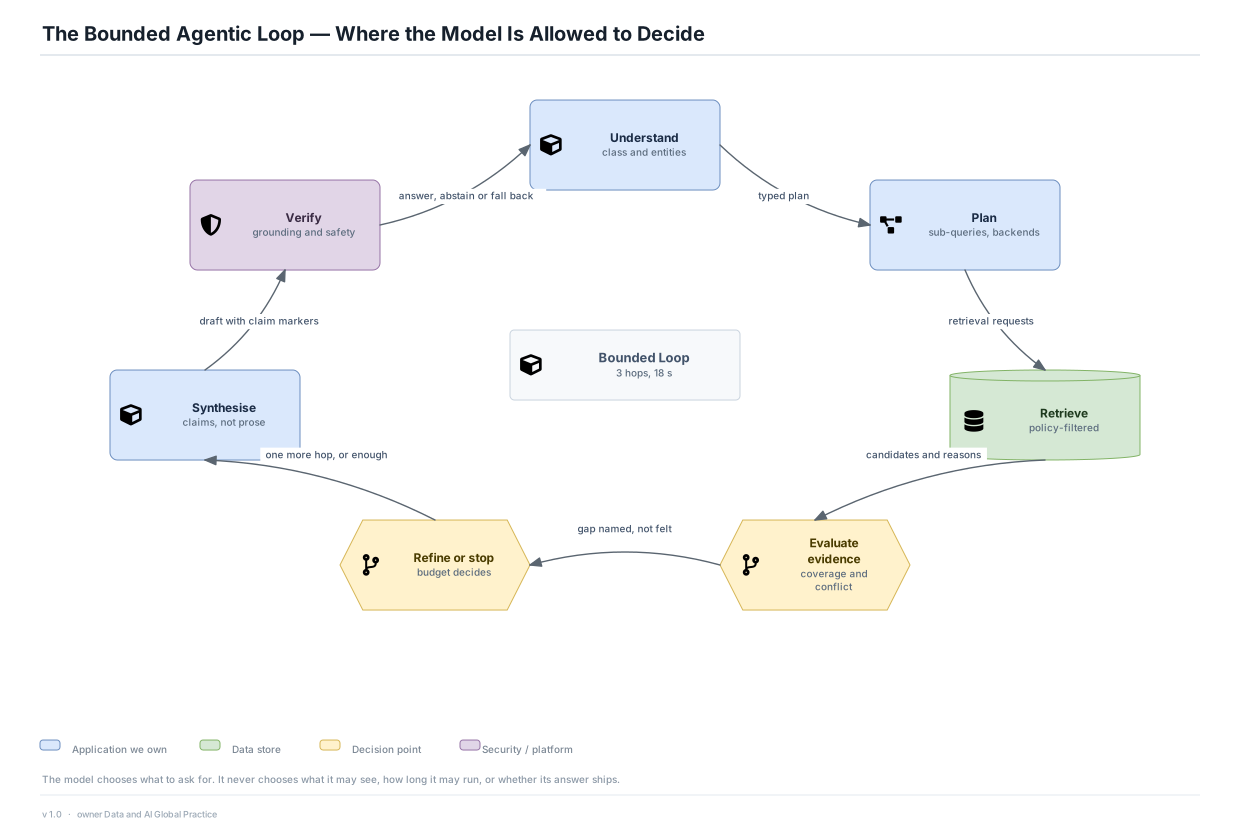
- The model chooses what to ask for. It does not choose what it may see, how long it may run, or whether its answer ships. Those three are held by the entitlement resolver, the budget governor and the verifier respectively.
- The loop is a state machine with typed transitions, not a free-running agent. Every transition is a span in the trace, which is what makes a wrong answer diagnosable rather than merely regrettable.
- Evaluate evidence names the gap — coverage of a sub-query, or a detected conflict — so refinement is targeted retrieval rather than another attempt at the same question.
Numbers
- Hard limits: 3 hops, 45,000 tokens, 18 seconds, 6 retrieval calls. Reaching any limit produces the best grounded answer so far, explicitly marked as incomplete.
- Measured: 2.4 hops average on the multi-hop class; 7% of agentic queries hit a limit, and their task-success rate is tracked separately.
Risks
- An agentic loop with no ceiling is a cost incident waiting for one badly phrased question. The budget governor is a hard stop, not a warning.
- Loops that fail late are expensive. The evaluate stage is deliberately cheap so that stopping early is the common outcome.