Enterprise Generative Search — Azure and Open Source  ·  View 18 of 41  ·  Data

Chunking and Representation

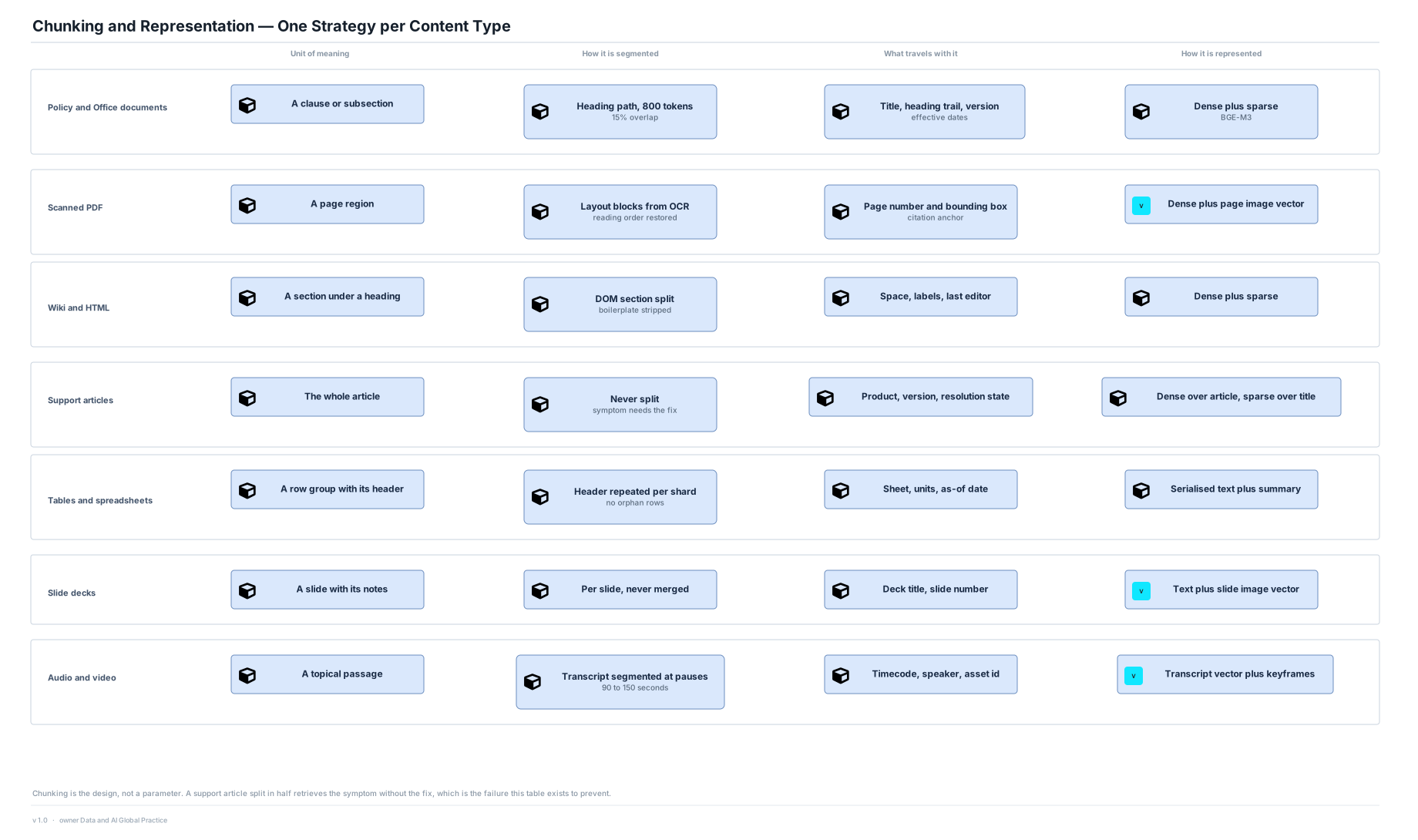
Seven content types, seven strategies, and why one setting for all of them fails.

Editable source SVG draw.io All views
Unit of meaning How it is segmented What travels with it How it is represented Policy and Office documents A clause or subsection Heading path, 800 tokens 15% overlap Title, heading trail, version effective dates Dense plus sparse BGE-M3 Scanned PDF A page region Layout blocks from OCR reading order restored Page number and bounding box citation anchor Dense plus page image vector Wiki and HTML A section under a heading DOM section split boilerplate stripped Space, labels, last editor Dense plus sparse Support articles The whole article Never split symptom needs the fix Product, version, resolution state Dense over article, sparse over title Tables and spreadsheets A row group with its header Header repeated per shard no orphan rows Sheet, units, as-of date Serialised text plus summary Slide decks A slide with its notes Per slide, never merged Deck title, slide number Text plus slide image vector Audio and video A topical passage Transcript segmented at pauses 90 to 150 seconds Timecode, speaker, asset id Transcript vector plus keyframes Chunking and Representation — One Strategy per Content Type Chunking is the design, not a parameter. A support article split in half retrieves the symptom without the fix, which is the failure this table exists to prevent. v 1.0 · owner Data and AI Global Practice

Decisions

  • Chunking is design, not a parameter. A support article split in half retrieves the symptom without the fix; a table row separated from its header is a number with no meaning.
  • Every chunk carries a context header — title, heading path, version, effective date. Without it a retrieved passage is ambiguous to the model in exactly the way it would be to a person.
  • Overlap is applied to prose only. Applying it to tables and articles duplicates evidence and inflates apparent corroboration.

Numbers

  • 800 token target for prose with 15% overlap; measured Recall@50 improvement of 0.06 over a fixed 512-token split with no structure awareness.
  • 320 M chunks across 40 M documents — an average of 8 chunks per document, dominated by the archive.

Risks

  • A chunking change invalidates the entire index. It is therefore a shadow build with an alias swap in view 31, never an in-place migration.
  • Merged cells in spreadsheets and forms still mis-parse. The failure is reported to the steward rather than silently indexed as noise.