Enterprise Generative Search — Azure and Open Source · View 13 of 41 · Structure
Decisions
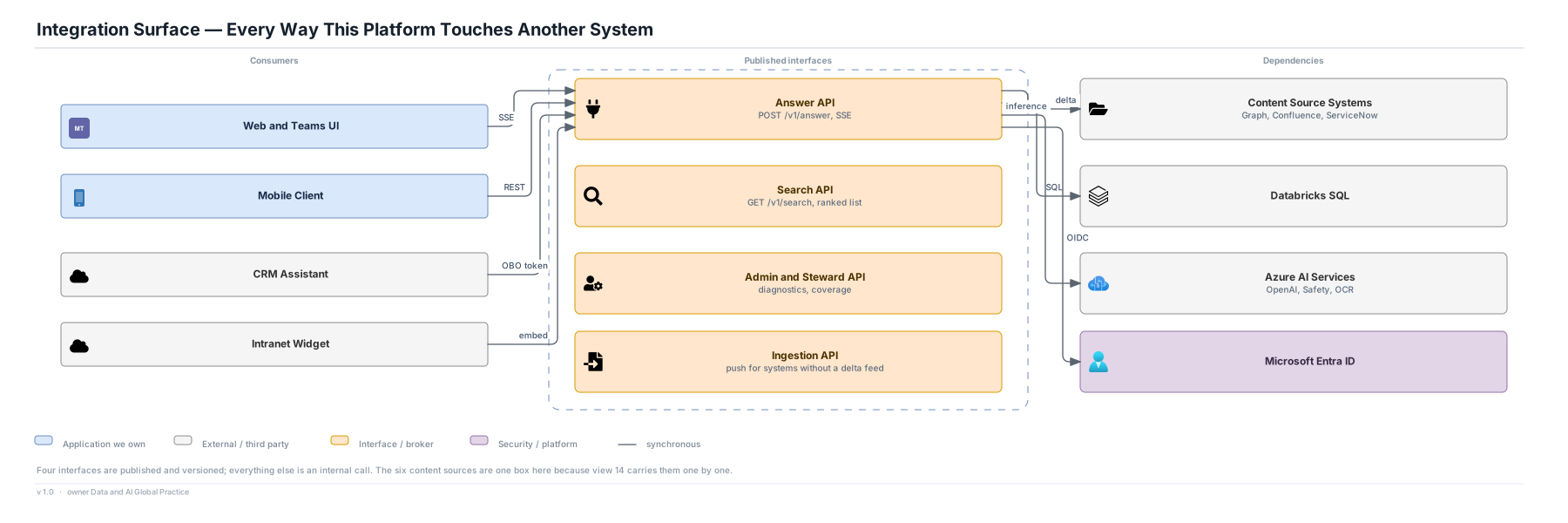
- The Answer API and the Search API are separate products, not one endpoint with a flag. The Search API has no model, no GPU and no vector dependency, which is what makes it the floor of the degradation ladder.
- Every consumer passes the caller's identity. There is no service-to-service path that reads content on a user's behalf with an application identity.
- The evaluation harness calls the same Answer API as a person does. Scores from a private code path would not measure the product.
Deliberately simplified
- The six content sources are one box on this page. View 14 carries them one by one with their change detection, authorisation model and parse path, which is where that detail belongs.
- Internal calls between services are not shown here; they are in view 10 and are not part of any contract.
Assumptions
- API Management enforces per-consumer quotas; the intranet widget is capped so a page loop cannot consume the tenant's token budget.
- All published interfaces are versioned with a 12-month deprecation window, which is the same policy the estate applies to other platform APIs.