Enterprise Generative Search — Azure and Open Source  ·  View 06 of 41  ·  People and journeys

Journey — Ask and Act

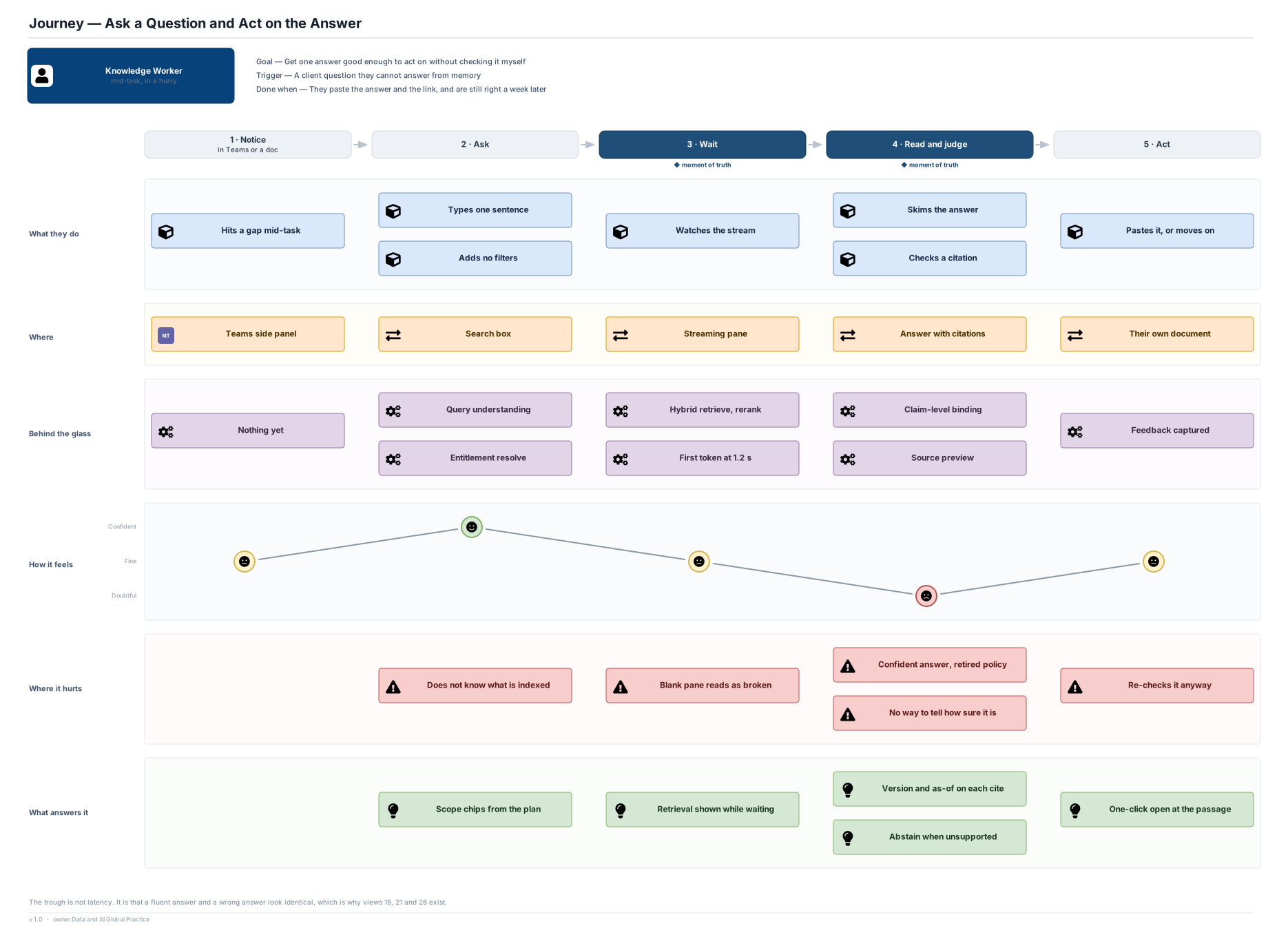
What happens in the first four seconds, and why the trough is not latency.

Editable source SVG draw.io All views
Knowledge Worker mid-task, in a hurry Goal — Get one answer good enough to act on without checking it myself Trigger — A client question they cannot answer from memory Done when — They paste the answer and the link, and are still right a week later 1 · Notice in Teams or a doc 2 · Ask 3 · Wait ◆ moment of truth 4 · Read and judge ◆ moment of truth 5 · Act What they do Hits a gap mid-task Types one sentence Adds no filters Watches the stream Skims the answer Checks a citation Pastes it, or moves on Where Teams side panel Search box Streaming pane Answer with citations Their own document Behind the glass Nothing yet Query understanding Entitlement resolve Hybrid retrieve, rerank First token at 1.2 s Claim-level binding Source preview Feedback captured How it feels Confident Fine Doubtful Where it hurts Does not know what is indexed Blank pane reads as broken Confident answer, retired policy No way to tell how sure it is Re-checks it anyway What answers it Scope chips from the plan Retrieval shown while waiting Version and as-of on each cite Abstain when unsupported One-click open at the passage Journey — Ask a Question and Act on the Answer The trough is not latency. It is that a fluent answer and a wrong answer look identical, which is why views 19, 21 and 26 exist. v 1.0 · owner Data and AI Global Practice

The trough, and what it demands

  • The low point is at Read and judge, not at Wait. A fluent answer and a wrong answer look identical, and a citation to a document that was superseded last quarter reads exactly like a citation to a current one.
  • That is a structural requirement, not a UX one: it decides that document versions carry effective dates, that supersession is a graph edge, and that every citation renders an as-of.
  • It is answered by views 19 (version in the model), 21 (supersession as a lifecycle step) and 26 (claim-level verification with an abstain path).

What the platform owes each phase

  • Wait: retrieval progress is streamed, because a blank pane for two seconds is read as a broken product rather than a working one.
  • Read: citations at claim level, not paragraph level, and a confidence the user can act on.
  • Act: one click opens the source at the cited passage, because the check a user does themselves is the one that builds trust.

Assumptions

  • Volumes: 180,000 queries a month on this journey, 26 queries a week per active user, 71% from the Teams side panel rather than the web UI.
  • Users do not add filters and will not learn to. Scope has to be inferred and then shown, not asked for.