Enterprise Generative Search — Azure and Open Source · View 03 of 41 · Context and scope
The decision everything follows from
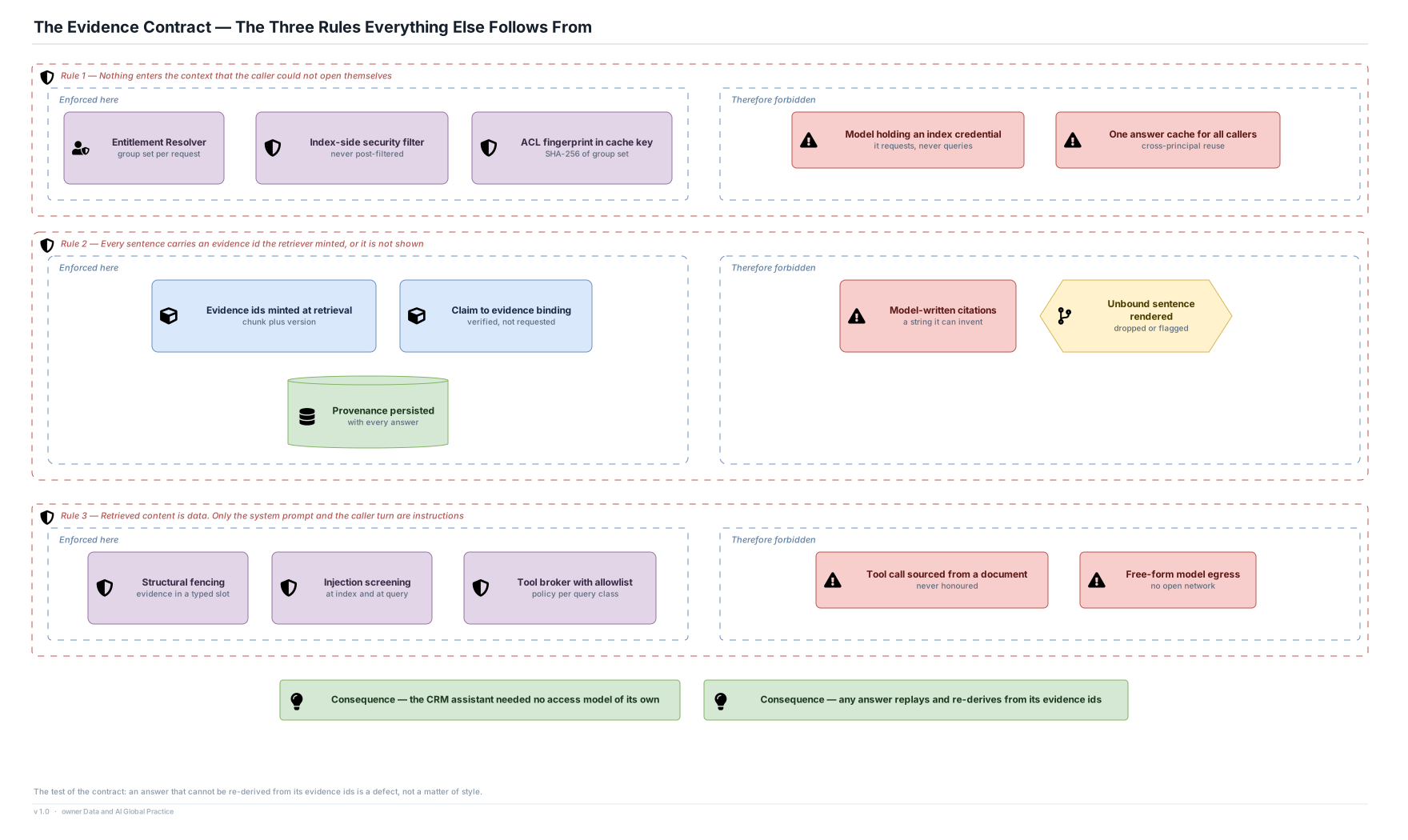
- Rule 1 makes authorisation an input to retrieval rather than a filter on its output. The consequence is that the ACL fingerprint is part of every cache key, and that no component holds a credential that can read more than its caller.
- Rule 2 makes provenance a data structure rather than a formatting convention. A citation joins a claim to a retrieval result, so any answer can be replayed and re-derived months later.
- Rule 3 makes the trust boundary structural. Evidence occupies a typed slot that is never read as instruction, so a poisoned document is a ranking problem rather than a compromise.
How each rule is tested
- Rule 1: a nightly assertion replays yesterday's answers under a stripped-down principal and fails if any evidence id is still reachable.
- Rule 2: every answer in the golden set is re-derived from its stored evidence ids; a claim that cannot be re-derived is a defect ticket.
- Rule 3: 220 adversarial documents are indexed into the fixture corpus, and any tool call whose provenance is a document body fails the build.
Risks
- The contract erodes quietly. A well-meaning cache that omits the fingerprint, or a prompt that pastes evidence into the instruction block, breaks it without any test failing unless the tests above exist.
- Claim-level binding costs latency and tokens. It is the single largest quality expense in the design and was justified against the alternative of a model writing its own citation strings.