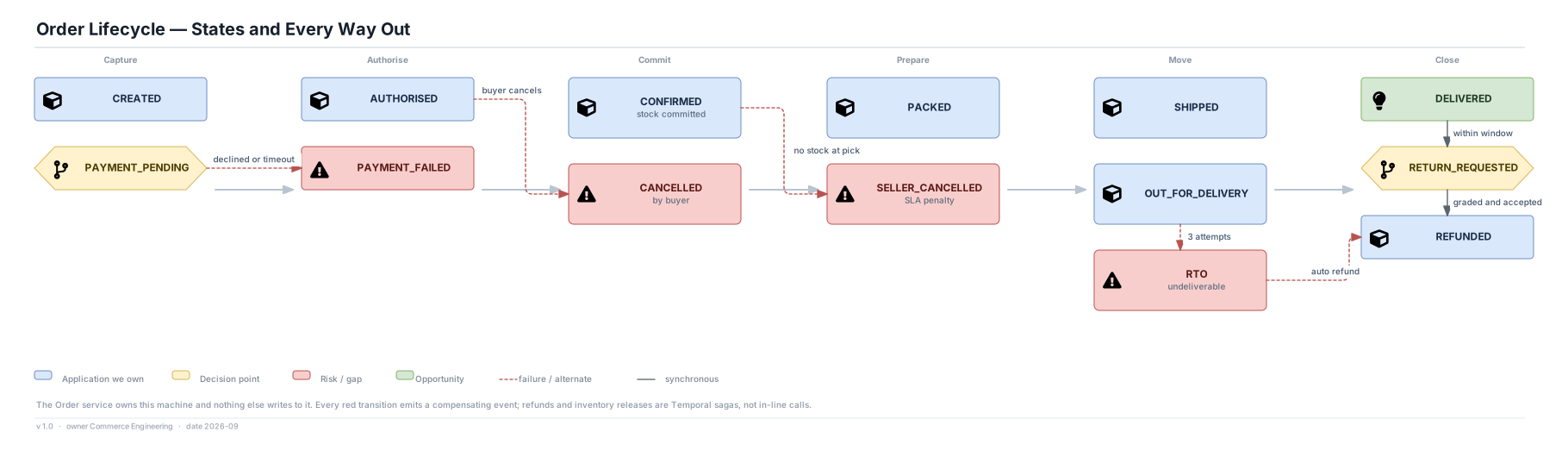
Flipkart Marketplace Platform · View 16 of 25 · 5 · Runtime
Decisions
- The Order service is the sole writer of order state; every other system reacts to its events
- Every red transition emits a compensating event rather than mutating another service directly
- Refunds, inventory releases and seller penalties are sagas with their own retries and their own visibility
Why the failure states are drawn
- SELLER_CANCELLED after CONFIRMED is the marketplace-specific failure a single-vendor design never has, and it drives seller quality scoring
- RTO is expensive and invisible in most designs; drawing it makes the reverse-logistics cost a first-class concern
- PAYMENT_FAILED and CANCELLED look similar to a customer and completely different to a ledger
Deliberately omitted
- Partial cancellations and split shipments, which multiply the state count without changing the shape
- Exchange, which is modelled as a return plus a new order
- Timeout durations per transition, which live in the runbook