File Upload & Scanning Pipeline · View 19 of 21 · Operations
The closing arrow
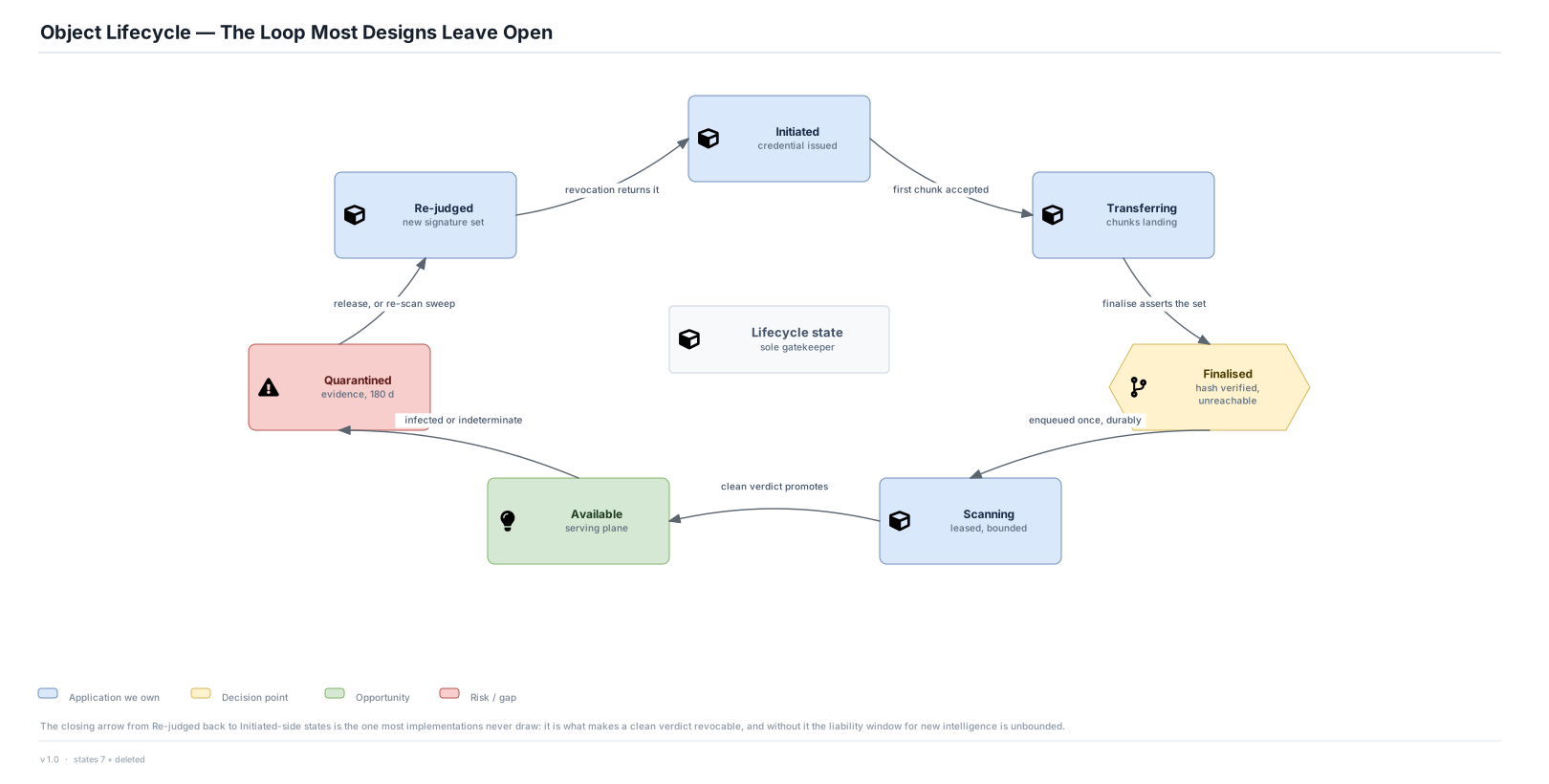
- Re-judged returning an object to quarantine is what makes a clean verdict revocable. Without it, the liability window for new intelligence is unbounded.
- A state machine that only moves forwards cannot express "we were wrong yesterday", which is the single most common defect in upload pipelines
- Revocation must propagate inside the read-credential lifetime, which is why that credential is 5 minutes
Decisions
- Finalised is a real state in which bytes exist and nothing can read them — the state that the whole two-plane split exists to make structural
- Indeterminate is a terminal verdict with its own handling path, not a retry loop: it reaches a human or a policy decision within 24 hours
- Every transition is recorded with actor, cause and timestamp in an append-only log; an object in a non-terminal state past its dwell time is reconciled, re-driven or reported — never left silent
Stated assumptions
- Rolling 180-day re-scan sweep for older objects, 24 h for the recent window
- Quarantine evidence 180 days before irreversible destruction
- Indeterminate rate ≤ 0.2% of objects