Embedding Pipeline Service · View 15 of 22 · Runtime
Degrade a dimension, not the service
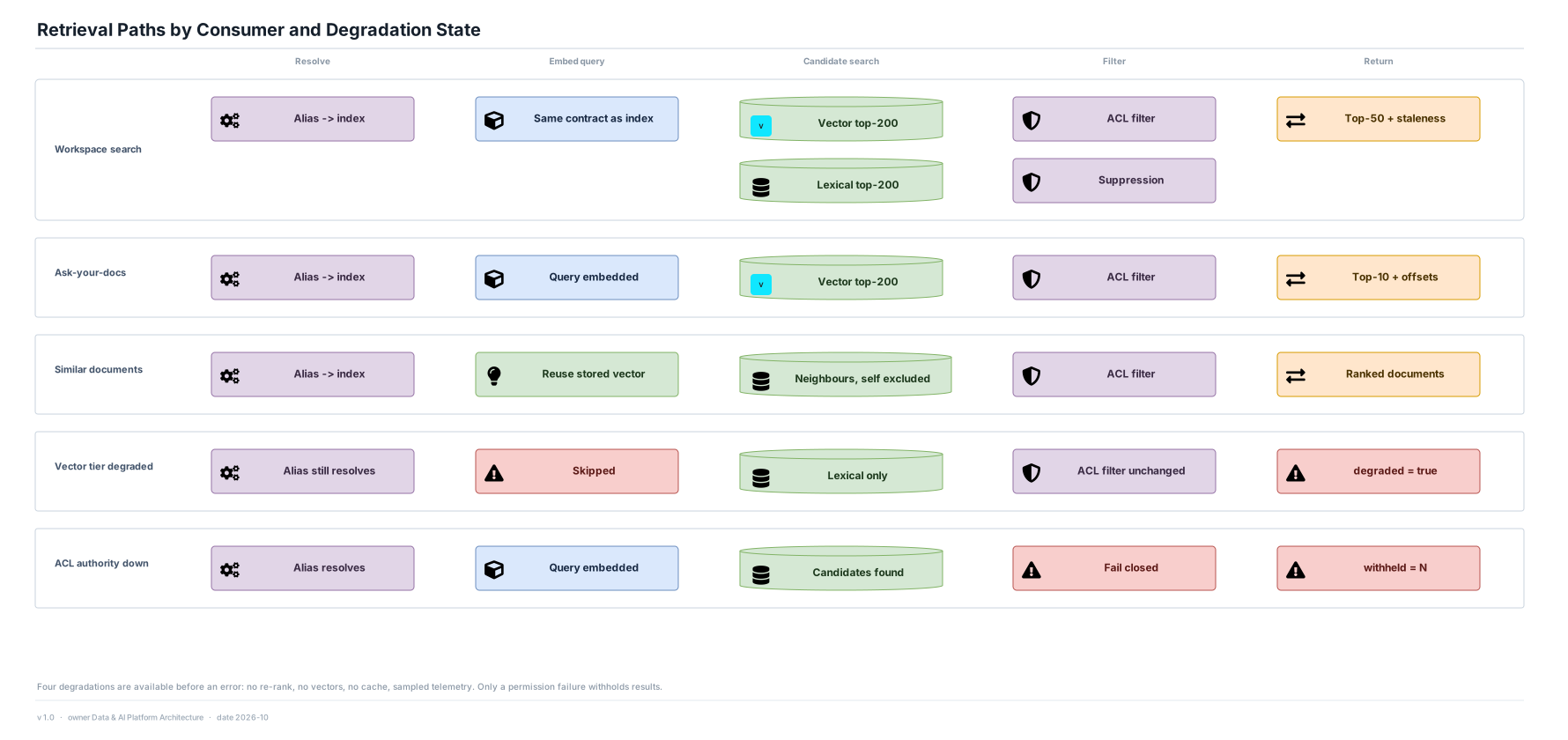
- Four degradations are available before an error: skip re-ranking, drop to lexical-only, lose the query cache, sample telemetry. Each is visible in the response.
- A vector-tier outage returns lexical results with degraded = true rather than a 503. A consumer that wants to hide those results can; the platform does not decide for it.
- Only a permission-resolution failure withholds: results are excluded and the count of withheld items is returned.
Why similar-documents is cheaper
- It reuses the document's already-stored vector instead of embedding a query, which removes the one GPU call on the read path.
- That is only correct because the stored vector and the index share a contract — the same invariant that forbids a query spanning contracts.
Open question carried forward
- Where the permission filter belongs (requirement question 5) is drawn here as post-filter over a larger candidate set. With a user who can read 1% of a tenant's corpus, recall loss may force pre-filtering or per-principal partitions.
- Candidate set sizes (200 → 50) are a starting point to be measured per corpus, not a settled constant.