Embedding Pipeline Service · View 10 of 22 · Data
The two paths
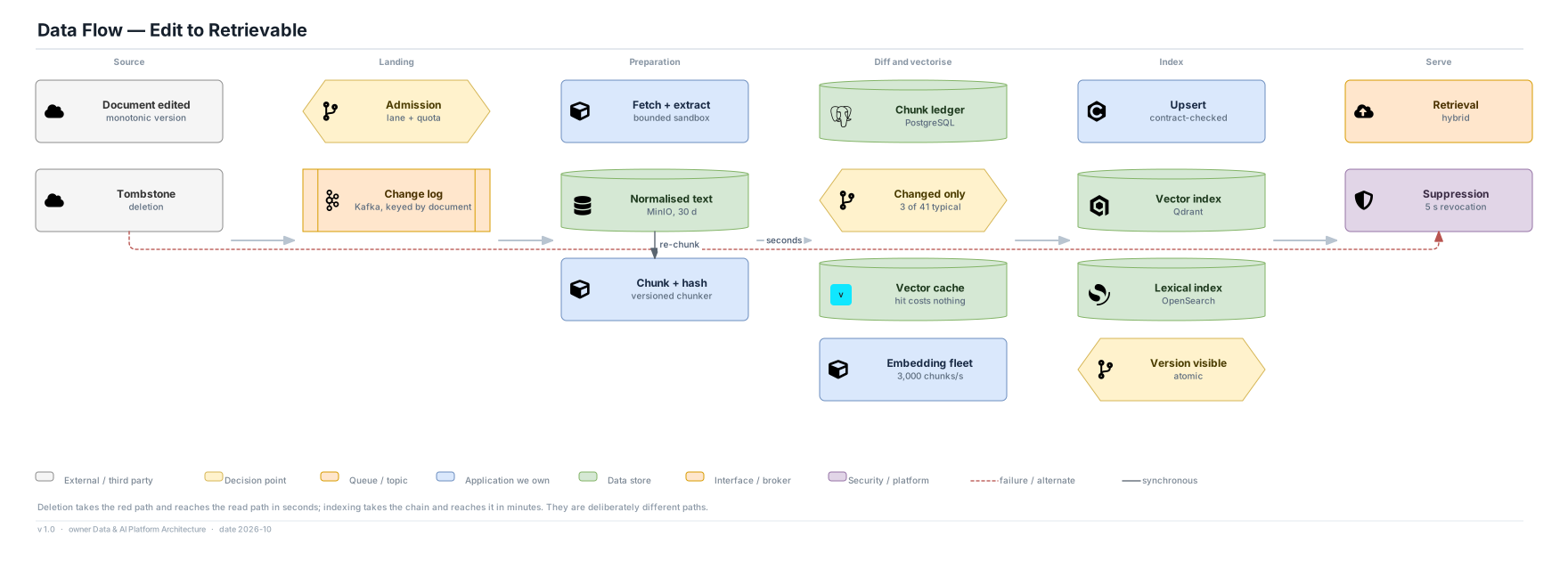
- Indexing travels the chain and arrives in minutes. Deletion and revocation travel the red path and arrive in seconds, because they must not inherit the pipeline's latency.
- That separation is the single reason a tenant admin's revocation promise is five seconds while the freshness promise is thirty.
- Erasure still propagates through every store afterwards; the suppression list is what makes the read path correct while that happens.
Where the cost is decided
- The ledger diff: a typical 41-chunk document edit produces 3 changed chunks. Everything downstream is proportional to that number, not to the document.
- The cache lookup: an identical chunk under the same contract costs nothing at all, which is what makes reverted edits and shared templates free.
- Retained normalised text means a chunker change re-enters at the chunk stage rather than at the fetch stage.
Assumptions
- 8 million document versions per day; 75% chunk reuse; about 24 million chunk embeddings per day, 280/s mean.
- Embedding fleet 3,000 chunks/s sustained with a 5× burst for 15 minutes.