Data Quality Service · View 20 of 20 · Assurance
Decisions
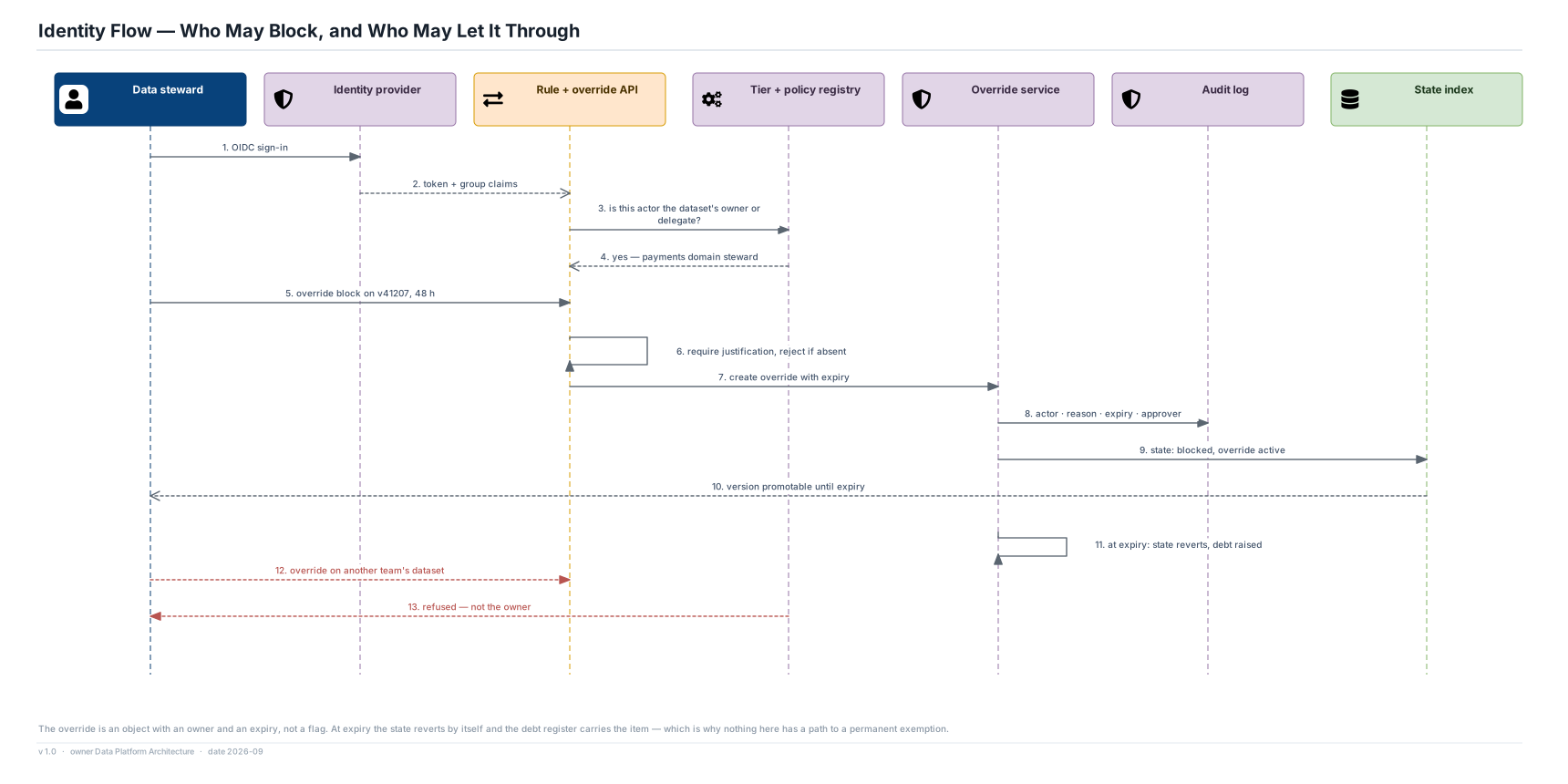
- The override is an object with an owner, a justification and an expiry — not a flag. At expiry the state reverts by itself and the debt register carries the item (ADR-16).
- Only the dataset's owning team or a named delegate may author a blocking assertion, grant an override, or retire an assertion. The policy registry answers that question, not the API (ADR-13).
- Every grant is written to an immutable log with actor, reason, expiry and approver before the state changes, so the record cannot be the thing that failed (ADR-14).
The refusal path
- The last two messages are the cross-domain attempt: a steward acting on another team's dataset is refused by the policy registry, not by convention.
- A justification is mandatory and structurally enforced — the API rejects an override without one rather than recording an empty string.
Assumptions
- OIDC with group claims from the corporate identity provider; 48 h is an illustrative override window against a 7-day default ceiling. Stated assumptions.
- Suppressions follow the same lifecycle as overrides: expiry mandatory, unbounded suppression unsupported.