Data Quality Service  ·  View 18 of 20  ·  Operations

Observability

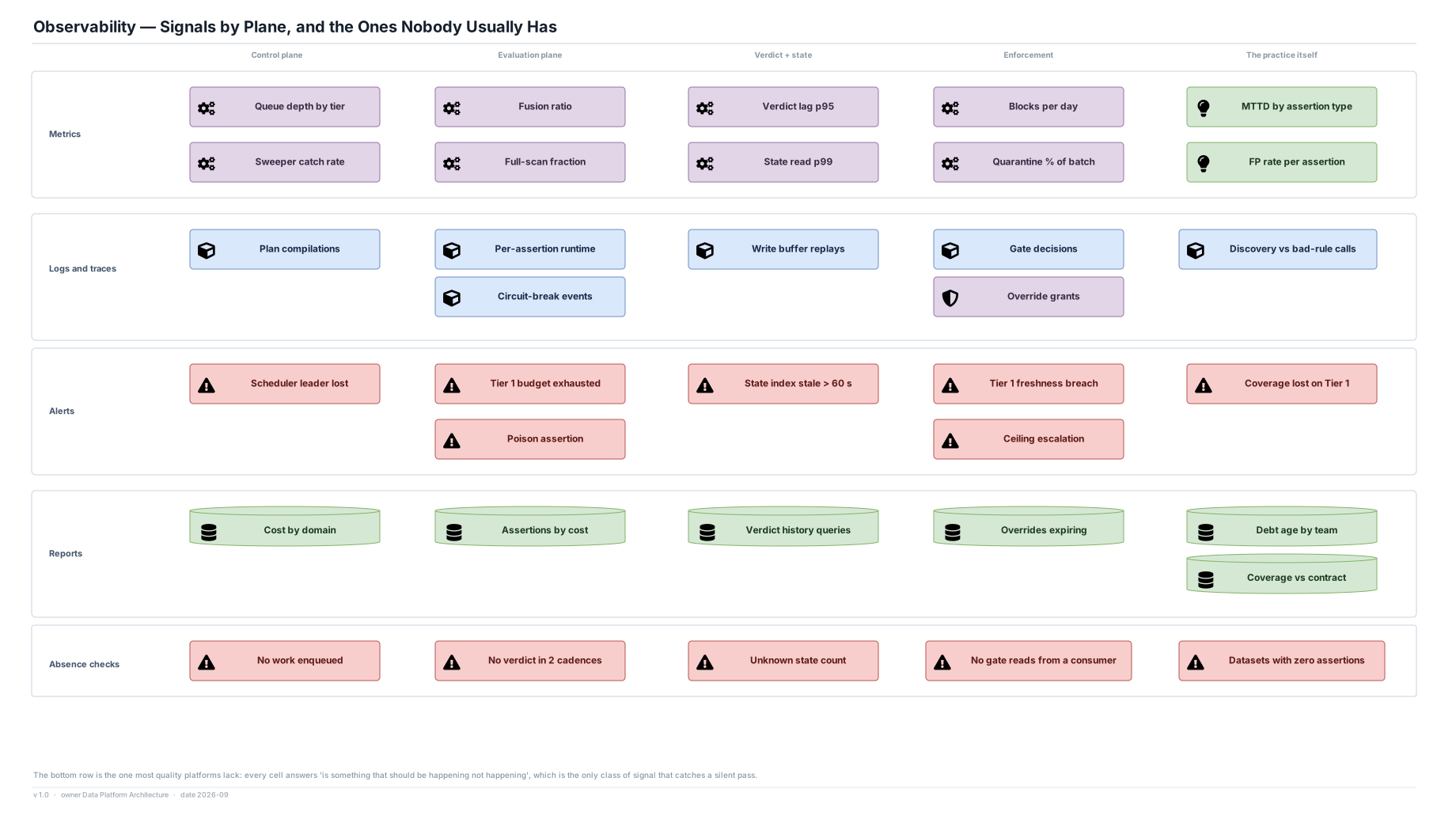
Signal type against plane — and a bottom row of checks for things that should be happening and are not.

Editable source SVG draw.io All views
Control plane Evaluation plane Verdict + state Enforcement The practice itself Metrics Queue depth by tier Sweeper catch rate Fusion ratio Full-scan fraction Verdict lag p95 State read p99 Blocks per day Quarantine % of batch MTTD by assertion type FP rate per assertion Logs and traces Plan compilations Per-assertion runtime Circuit-break events Write buffer replays Gate decisions Override grants Discovery vs bad-rule calls Alerts Scheduler leader lost Tier 1 budget exhausted Poison assertion State index stale > 60 s Tier 1 freshness breach Ceiling escalation Coverage lost on Tier 1 Reports Cost by domain Assertions by cost Verdict history queries Overrides expiring Debt age by team Coverage vs contract Absence checks No work enqueued No verdict in 2 cadences Unknown state count No gate reads from a consumer Datasets with zero assertions Observability — Signals by Plane, and the Ones Nobody Usually Has The bottom row is the one most quality platforms lack: every cell answers 'is something that should be happening not happening', which is the only class of signal that catches a silent pass. v 1.0 · owner Data Platform Architecture · date 2026-09

The row most platforms lack

  • Absence checks are the only class of signal that catches a silent pass: no work enqueued, no verdict in two cadences, an unknown-state count that is climbing, a dataset with zero assertions (ADR-05, ADR-09).
  • MTTD by assertion type and false-positive rate per assertion are measured about the practice itself, not the software. They are the two numbers that say whether the platform is enforced or decorative (ADR-12).
  • Override grants are logged as security events, not as application logs, because that is the trail an auditor follows (ADR-14).

Numbers

  • Alert thresholds: state index stale > 60 s, Tier 1 freshness breach within one cadence + 60 s, quarantine over the 2% ceiling. Stated assumptions.
  • MTTD ≤ 4 h p90 for Tier 1 correctness defects; ≤ 24 h p90 for the silent-corruption class.

Risks

  • 'No gate reads from a consumer' is the check that catches the worst operational failure in this design: a consumer that quietly stopped asking. Without it, an advisory gate decays into no gate at all (ADR-03).