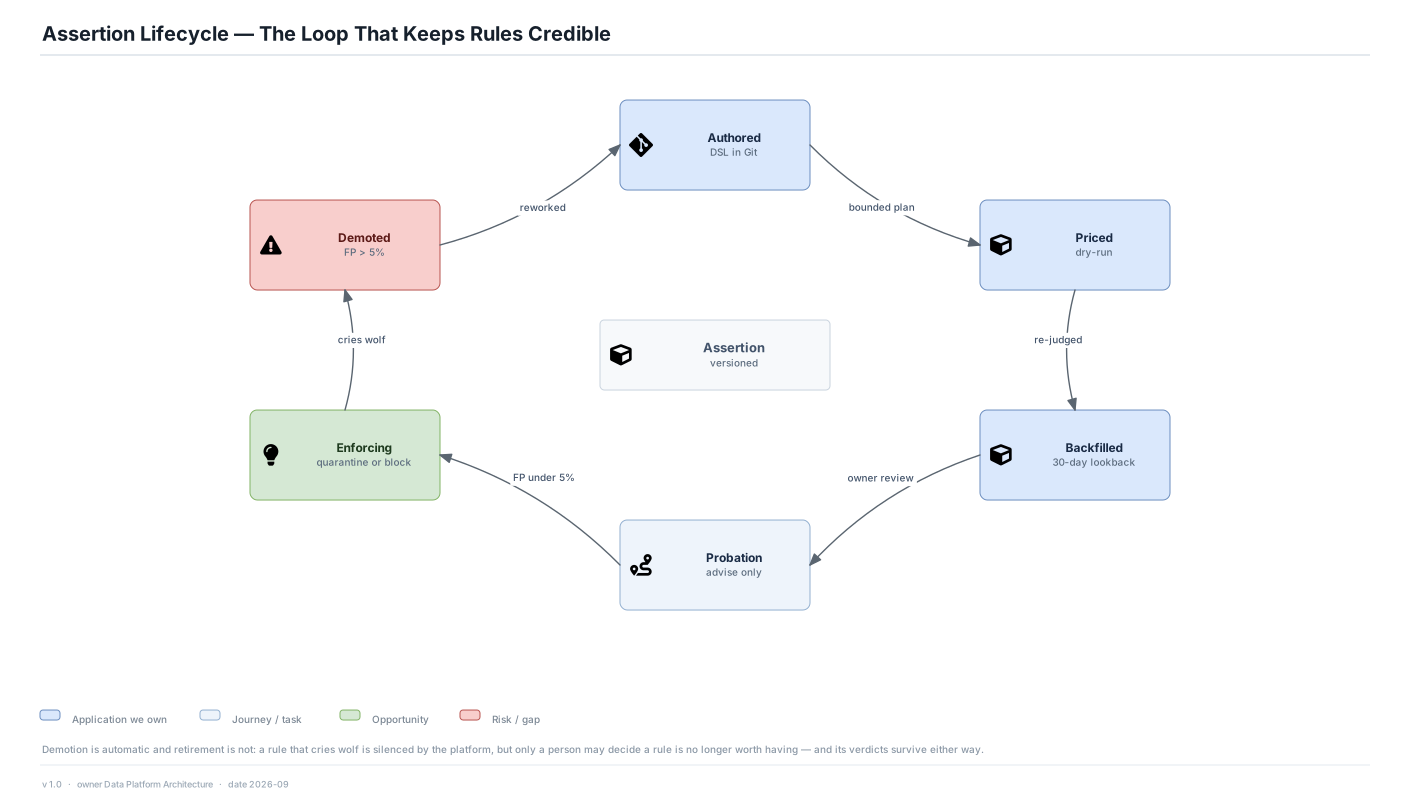
Data Quality Service · View 15 of 20 · Runtime
Why it is a loop
- Demotion is automatic; retirement is not. The platform silences a rule above a 5% false-positive rate without waiting for anyone, but only a person may decide a rule is no longer worth having (ADR-12).
- A retired assertion keeps every verdict it produced. Retirement stops future evaluation; it does not rewrite history (ADR-01).
- Pricing sits between authoring and history so that an expensive rule is refused, or negotiated, before it has consumed anything (ADR-08).
Assumptions
- 30-day probation, ≤ 5% false-positive rate over a trailing 30 days as the demotion threshold. Stated assumptions.
- Distributional assertions never leave probation automatically — they require an explicit promotion after their false-positive rate has been measured.
Risks
- The loop can stall in 'Demoted': a rule that was demoted and never reworked is a coverage gap wearing the appearance of coverage, which is why demoted assertions are debt items (ADR-16).