Data Quality Service · View 06 of 20 · Structure
The forbidden knowledge
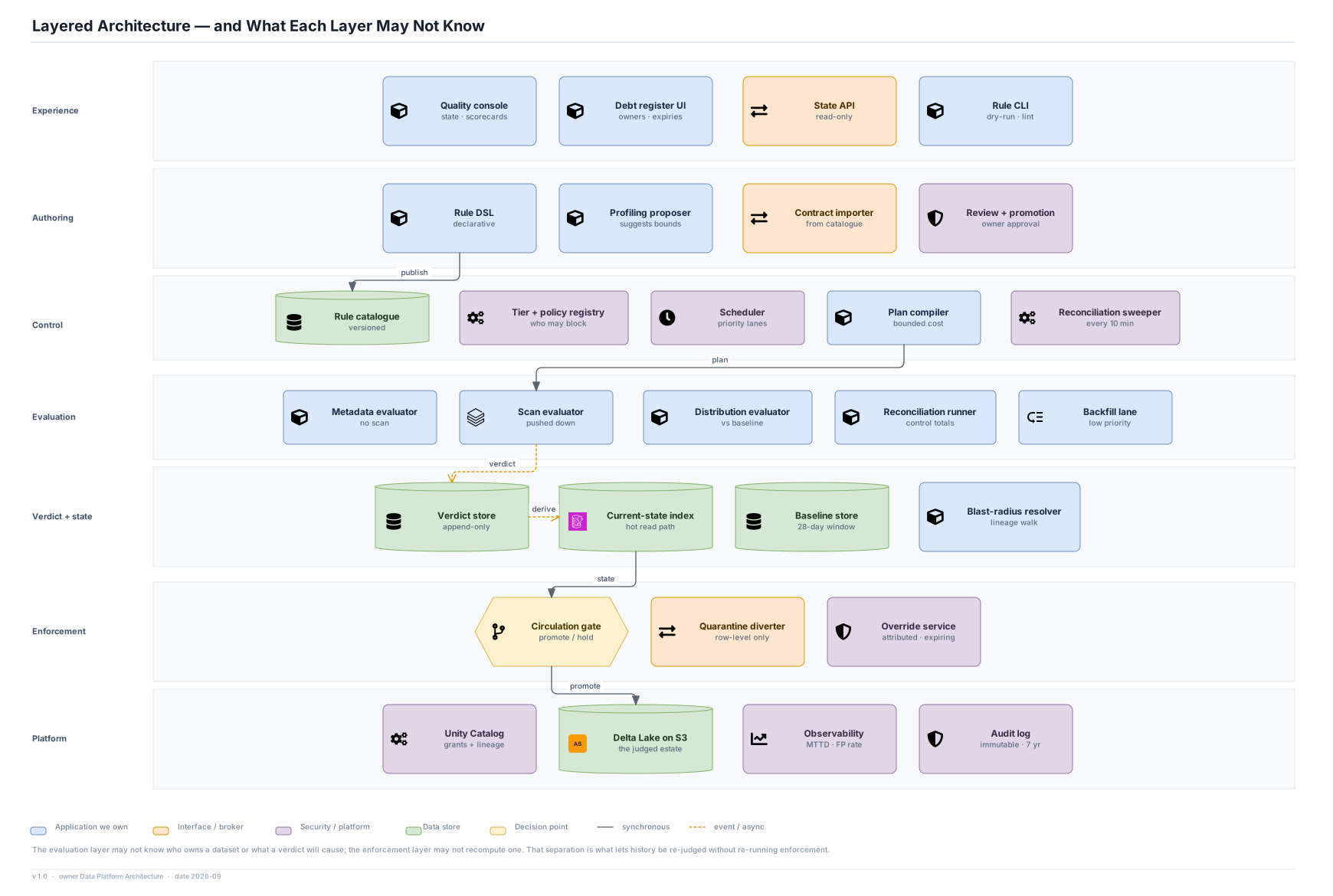
- The evaluation layer does not know who owns a dataset or what a verdict will cause. That is what lets the same evaluator be re-run over history without re-running enforcement (ADR-01).
- The enforcement layer does not recompute a verdict; it reads one. A gate that could re-evaluate would be a second, divergent judge.
- The authoring layer cannot write to the catalogue directly — publication goes through review and the tier policy, which is where 'who may block' is decided (ADR-13).
Assumptions
- The rule DSL's source of truth is Git; the catalogue is its materialisation, rebuildable from the repository.
- 40,000 active assertions at steady state across 12,000 datasets.
Deliberate omissions
- Six of roughly forty layer-crossing edges are drawn — the spine from publication to promotion. The rest would obscure it.
- The experience layer is sketched, not designed: this is a platform architecture, and the console's own information design is a separate piece of work.