Cloud Development Environment Platform · View 15 of 21 · Runtime
Decisions
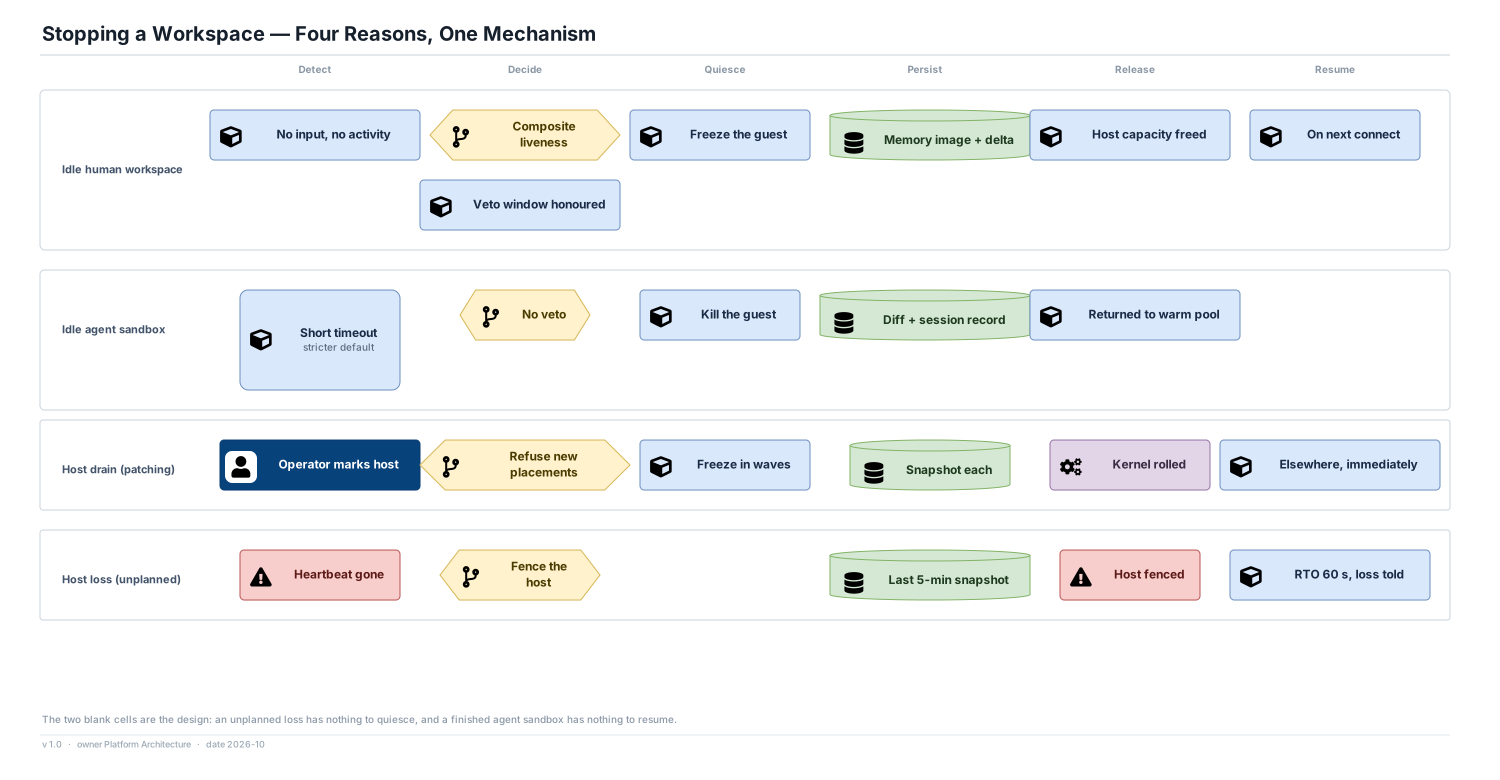
- All four reasons converge on the same persist-and-release mechanism, which is why patching, cost control and host failure are one piece of engineering rather than three.
- Only the human workspace gets a veto window on hibernation, bounded in minutes; an agent sandbox gets none (ADR-10).
- Host loss has nothing to quiesce, so it is drawn with a blank cell and answered by the last snapshot plus a reported lost interval.
Assumptions
- Hibernation to durable, resumable state p95 ≤ 12 s for a 2 GB memory image; RTO 60 s to resume elsewhere after host loss.
- No single host loss affects more than a small fraction of concurrent workspaces; the host is fenced before any resume is attempted.
Risks
- Fencing is the correctness-critical step: a workspace resumed on a second host while the first still runs is two divergent filesystems with one name.
- A poison workspace that crashes its own kernel repeatedly must not be auto-restarted into the same loop; it is contained and reported with its cause.