Chaos Engineering Platform · View 09 of 21 · Data
Decisions
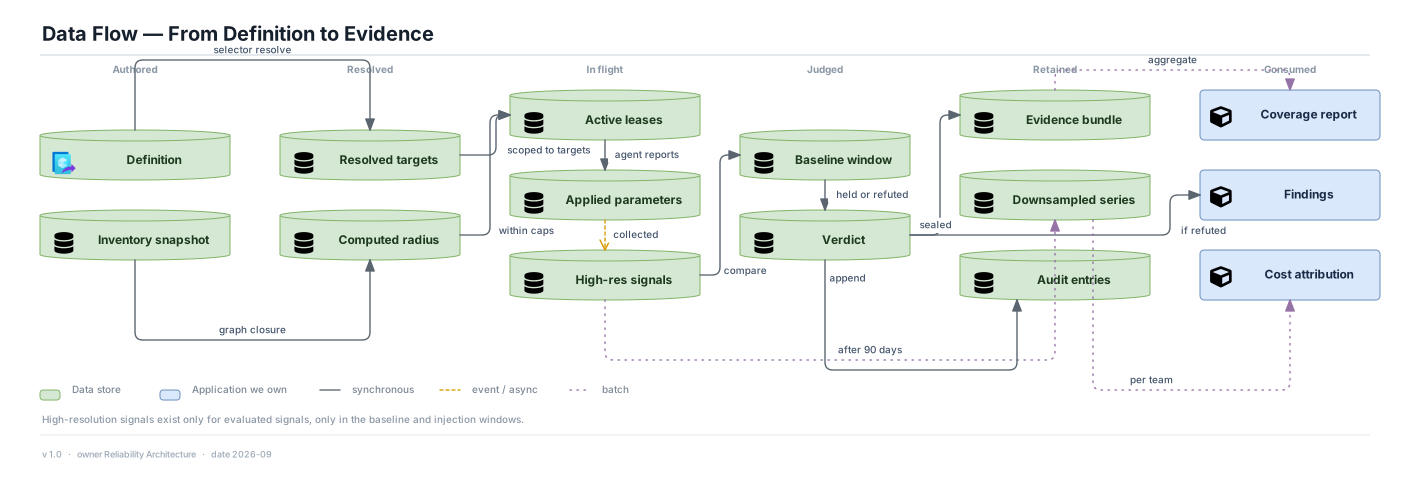
- High-resolution signals are collected only for evaluated signals, and only inside the baseline and injection windows. This is the dominant cost lever in the whole design.
- The applied fault parameters are recorded separately from the requested ones, because an adapter may clamp a value and a verdict read against the wrong parameters is worthless.
- Coverage and cost marts are derived and rebuildable; the run record and audit log are not.
Assumptions
- 500,000 samples/s during a large game day; ~100,000 run records a year with evidence bundles averaging 8 MB.
- High-resolution series kept 90 days, then downsampled for the life of the run record.
Risks
- Losing signal series inside the injection window degrades a verdict to INCONCLUSIVE. That is the intended behaviour and it is still a cost: the run has to be paid for twice.