API Key and Token Service · View 02 of 22 · Act 1 · Context and scope
The shape
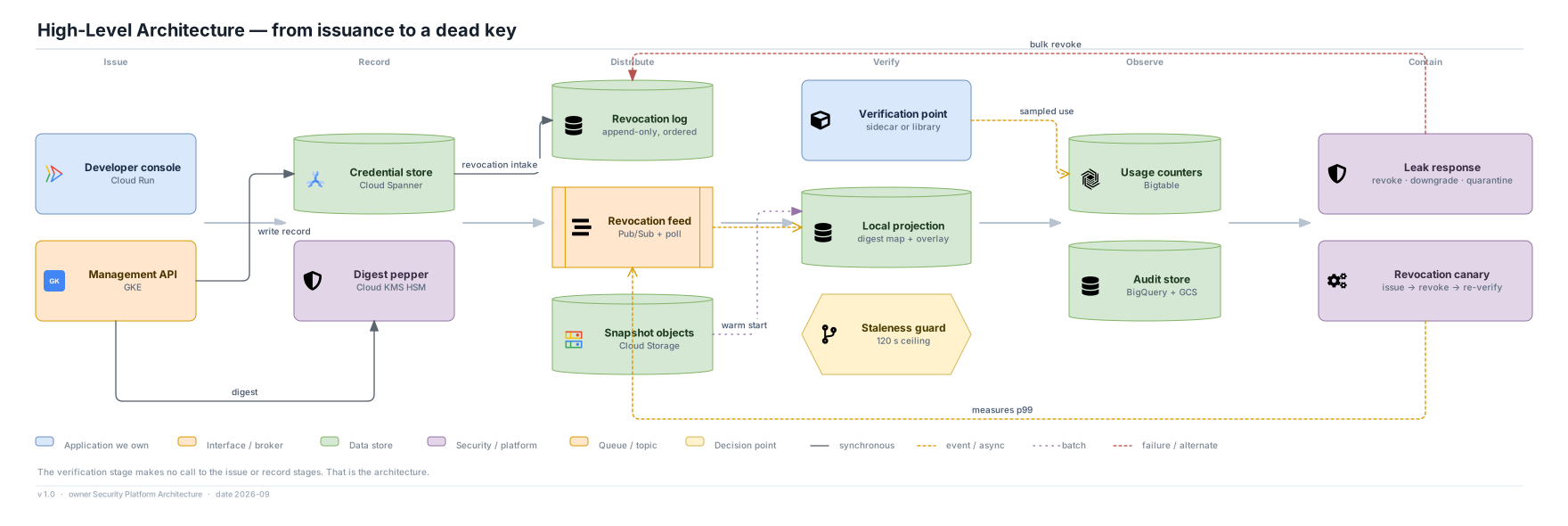
- Issue and Record are rare, transactional and centralised. Verify is constant, local and replicated. Nothing in Verify calls anything in Issue or Record.
- Distribute is the component that does not exist in the naive design, and it is where the correctness of the whole system lives.
- Contain is a first-class stage rather than a runbook: the leak response and the canary are built, deployed and measured.
Numbers on this page
- Verification p99 ≤ 3 ms in-process; ≤ 15 ms for the remote fallback.
- Revocation propagation p50 ≤ 2 s, p99 ≤ 10 s, hard ceiling 60 s.
- Staleness ceiling 120 s without a successful feed poll, after which privileged scopes are refused.
- All three are stated assumptions, and the first two are the numbers the canary measures in production.
Risks
- A verification point that silently stops receiving revocations looks exactly like a healthy one. The heartbeat and the staleness guard exist only for that.
- The snapshot path is the cold-start dependency; a fleet-wide restart with no snapshot is the one scenario that would put load on the credential store.