API Gateway Platform · View 12 of 21 · Runtime
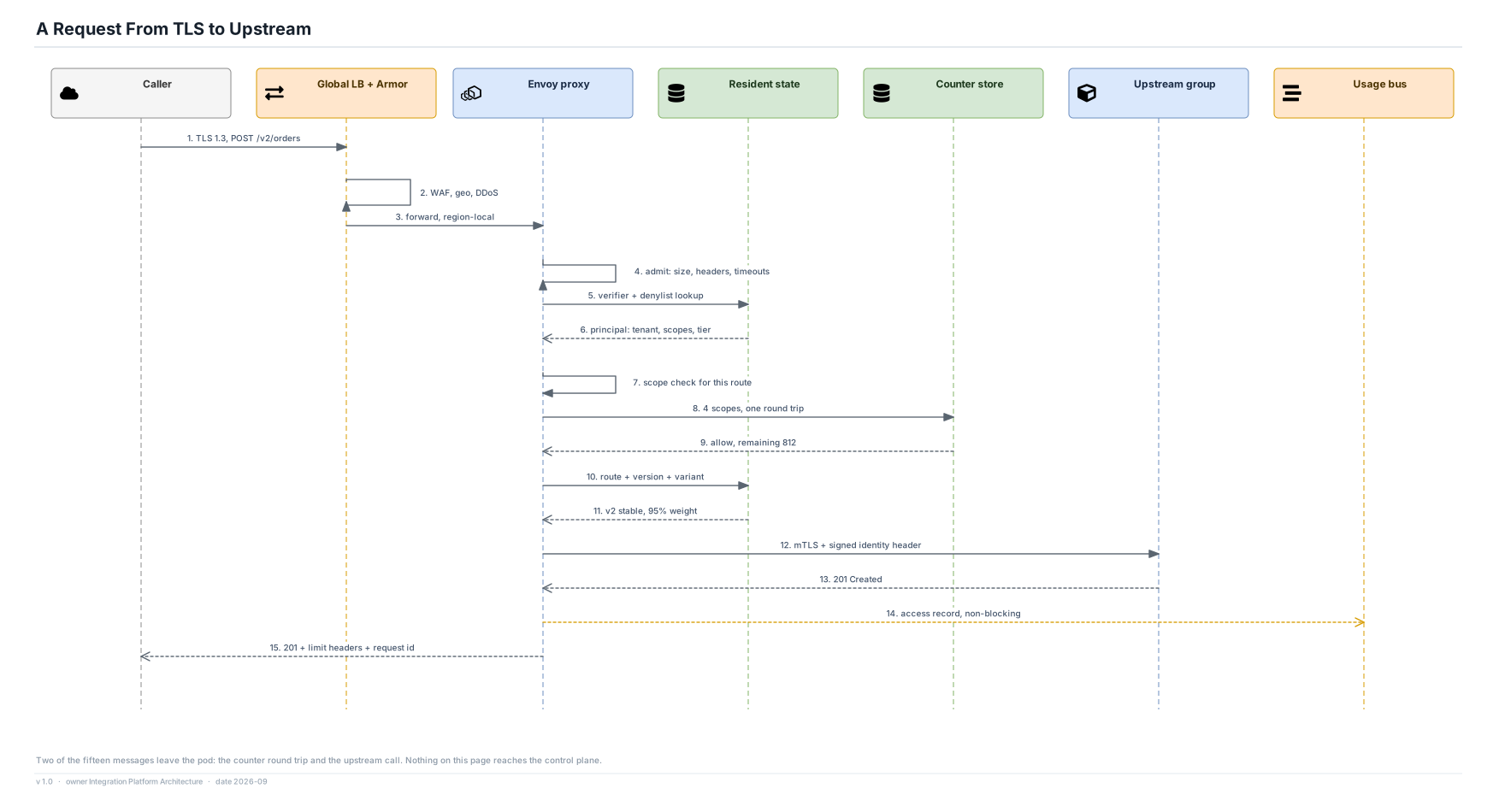
Read this against the latency budget
- Messages 5, 7 and 10 — credential, scope and route resolution — are in-process reads of resident state. On most designs these are network calls, and they are the reason most gateways cannot hold a 15 ms p99.
- Message 8 evaluates all four limit scopes in a single counter round trip. Four sequential round trips would blow the budget on their own.
- Message 14 is fire-and-forget. A saturated telemetry pipeline must never become request backpressure.
Numbers
- Gateway-added p99 ≤ 15 ms in-region; ≤ 25 ms when a cache miss forces a credential lookup (assumptions).
- Counter call timeout 5 ms, no retry — a slow counter degrades to local limiting rather than to latency.
Risks
- The cache-miss path is the tail. If the miss rate is materially above the assumed level, the p99 is set by the credential store rather than by the proxy, and ADR-03's token lifetime should be revisited.