API Gateway Platform  ·  View 08 of 21  ·  Structure

Integration Surface

Six ways in, five obligations out, and only one of them genuinely synchronous.

Editable source SVG draw.io All views
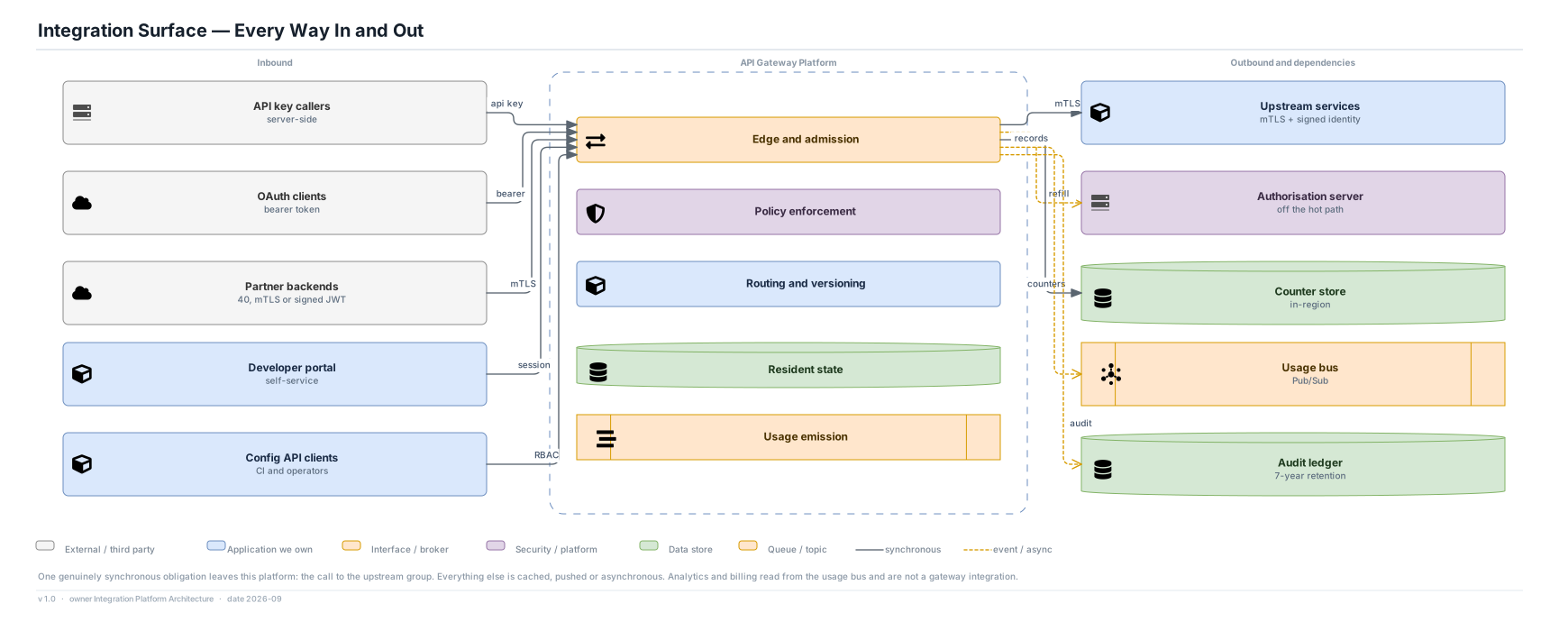
Inbound API key callers server-side OAuth clients bearer token Partner backends 40, mTLS or signed JWT Developer portal self-service Config API clients CI and operators API Gateway Platform Edge and admission Policy enforcement Routing and versioning Resident state Usage emission Outbound and dependencies Upstream services mTLS + signed identity Authorisation server off the hot path Counter store in-region Usage bus Pub/Sub Audit ledger 7-year retention api key bearer mTLS session RBAC mTLS refill counters records audit Integration Surface — Every Way In and Out External / third party Application we own Interface / broker Security / platform Data store Queue / topic synchronous event / async One genuinely synchronous obligation leaves this platform: the call to the upstream group. Everything else is cached, pushed or asynchronous. Analytics and billing read from the usage bus and are not a gateway integration. v 1.0 · owner Integration Platform Architecture · date 2026-09

Decisions

  • Four inbound credential types are supported because the ecosystem already has four kinds of caller; a single scheme would be cleaner and would exclude the partners.
  • The authorisation server is reached only to refill a cache, never on the hot path — that is what makes ADR-01 hold for OAuth traffic.
  • The only synchronous outbound obligation is the upstream call. Everything else is pushed, cached or asynchronous.

Assumptions

  • Access records ≈ 1 KB each, ≈ 2 TB/day compressed after sampling (assumption).
  • Audit and authentication events are never sampled, at any volume.

Omitted

  • Analytics and billing read from the usage bus and are not gateway integrations; the sandbox estate is a route target rather than a separate surface.
  • Two edge labels on this page sit close to an adjacent parallel line — a known cosmetic warning from the route checker, left rather than shortening the labels past the point of meaning.