API Gateway Platform  ·  View 02 of 21  ·  Context and scope

High-Level Architecture

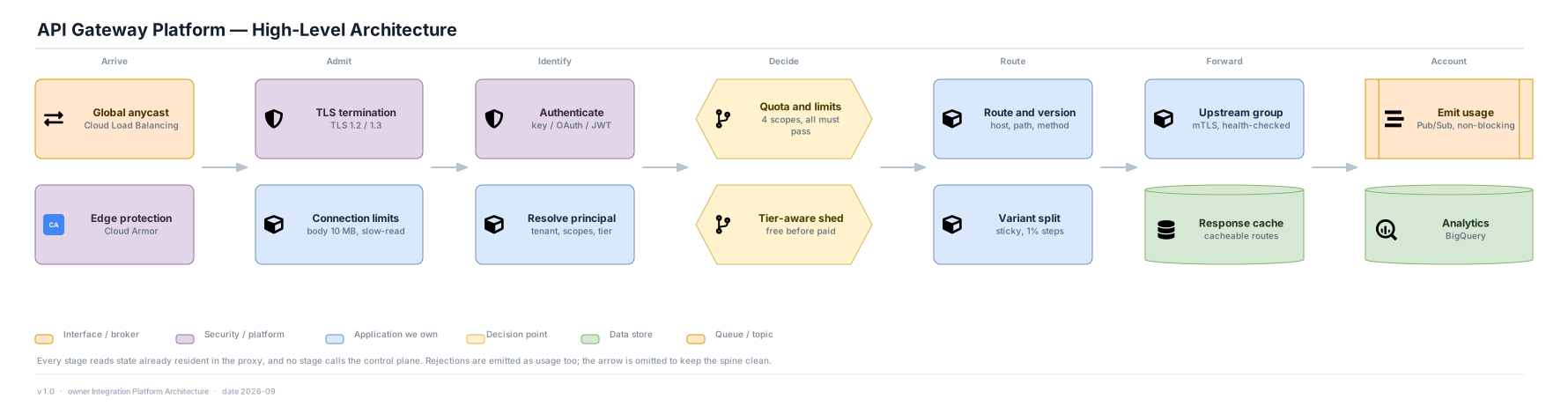
The seven things that happen to a request, in the order they happen.

Editable source SVG draw.io All views
Arrive Global anycast Cloud Load Balancing Edge protection Cloud Armor Admit TLS termination TLS 1.2 / 1.3 Connection limits body 10 MB, slow-read Identify Authenticate key / OAuth / JWT Resolve principal tenant, scopes, tier Decide Quota and limits 4 scopes, all must pass Tier-aware shed free before paid Route Route and version host, path, method Variant split sticky, 1% steps Forward Upstream group mTLS, health-checked Response cache cacheable routes Account Emit usage Pub/Sub, non-blocking Analytics BigQuery API Gateway Platform — High-Level Architecture Interface / broker Security / platform Application we own Decision point Data store Queue / topic Every stage reads state already resident in the proxy, and no stage calls the control plane. Rejections are emitted as usage too; the arrow is omitted to keep the spine clean. v 1.0 · owner Integration Platform Architecture · date 2026-09

Decisions

  • Admission protections run before any policy work, so a malformed or abusive request is cheap to refuse.
  • Authentication precedes quota: an unauthenticated request has no principal to charge, and charging an anonymous bucket is how a credential-stuffing attack exhausts a tenant's quota.
  • Usage emission is the last stage and is non-blocking. Evidence never gates a response.

Budget

  • Gateway-added overhead: p50 ≤ 3 ms, p95 ≤ 8 ms, p99 ≤ 15 ms in-region (assumption).
  • The gateway shall consume no more than 5% of a route's end-to-end latency budget at p99.
  • Only two stages leave the pod: the counter round trip and the upstream call.

Omitted

  • Rejections are emitted as usage records too; the arrow is left off so the spine reads as one path.
  • Response caching applies only to routes marked cacheable and is shown on view 07.