AI Code Completion Service · View 15 of 21 · Runtime
Why this view exists
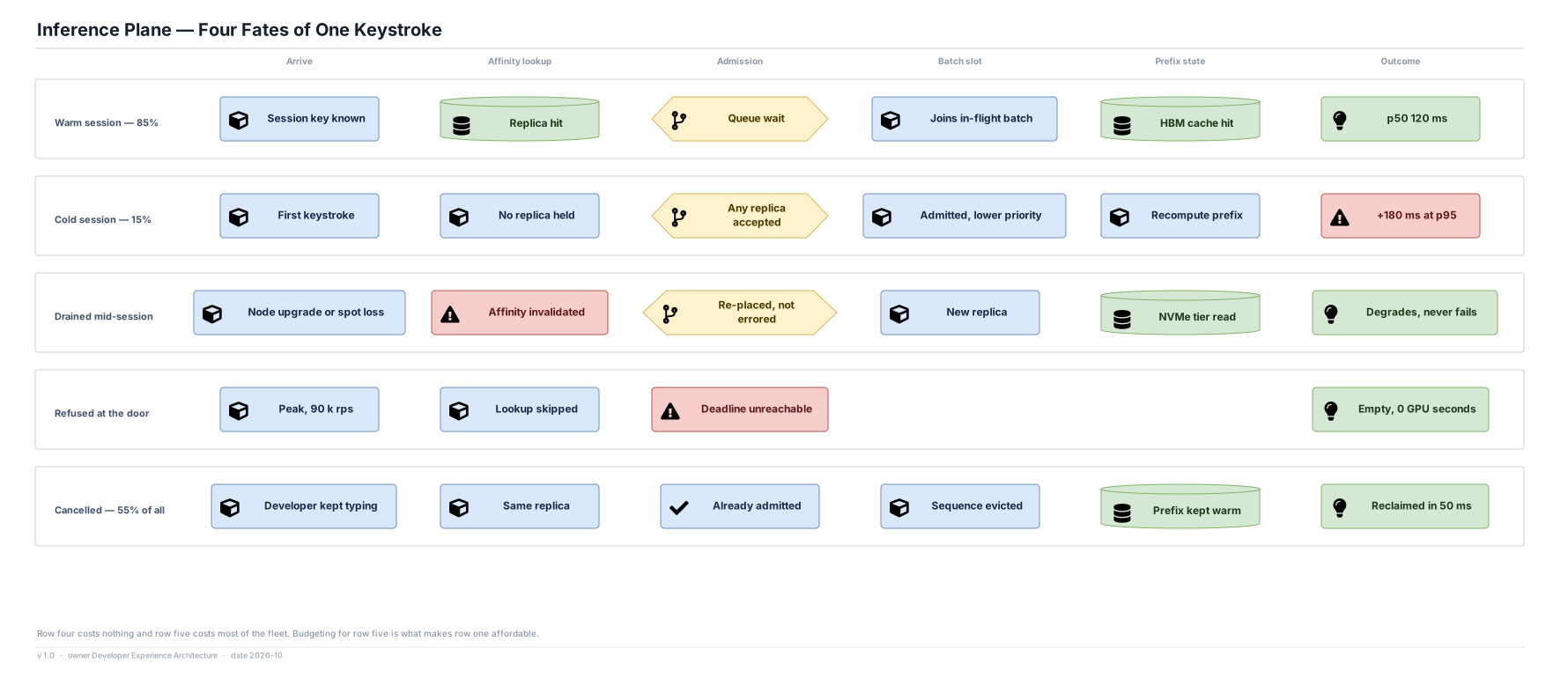
- The cancelled row is 55% of all traffic. Budgeting for it explicitly — eager reclamation, prefix kept warm, wasted generation as a capped metric — is what makes the warm row affordable.
- The drained row is the cost of session affinity, and it is a latency penalty rather than an error. A design that errored here would have made affinity unacceptable.
- The refused row costs zero accelerator seconds, which is the entire argument for admission control over queueing.
Assumptions
- Warm 85% / cold 15%; cold costs ≤ 180 ms extra at p95.
- Cancellation releases accelerator work within 50 ms at p99; wasted generation ≤ 18% of accelerator seconds.
- Continuous batching to 64 concurrent sequences per replica; fleet utilisation ≥ 55% over a working day.
Risks
- The cold row and the drained row share a mechanism, so a bad drain protocol shows up as a latency regression that looks like a model problem.