AI Code Completion Service  ·  View 11 of 21  ·  Data

Data Architecture — Ownership and Rebuildability

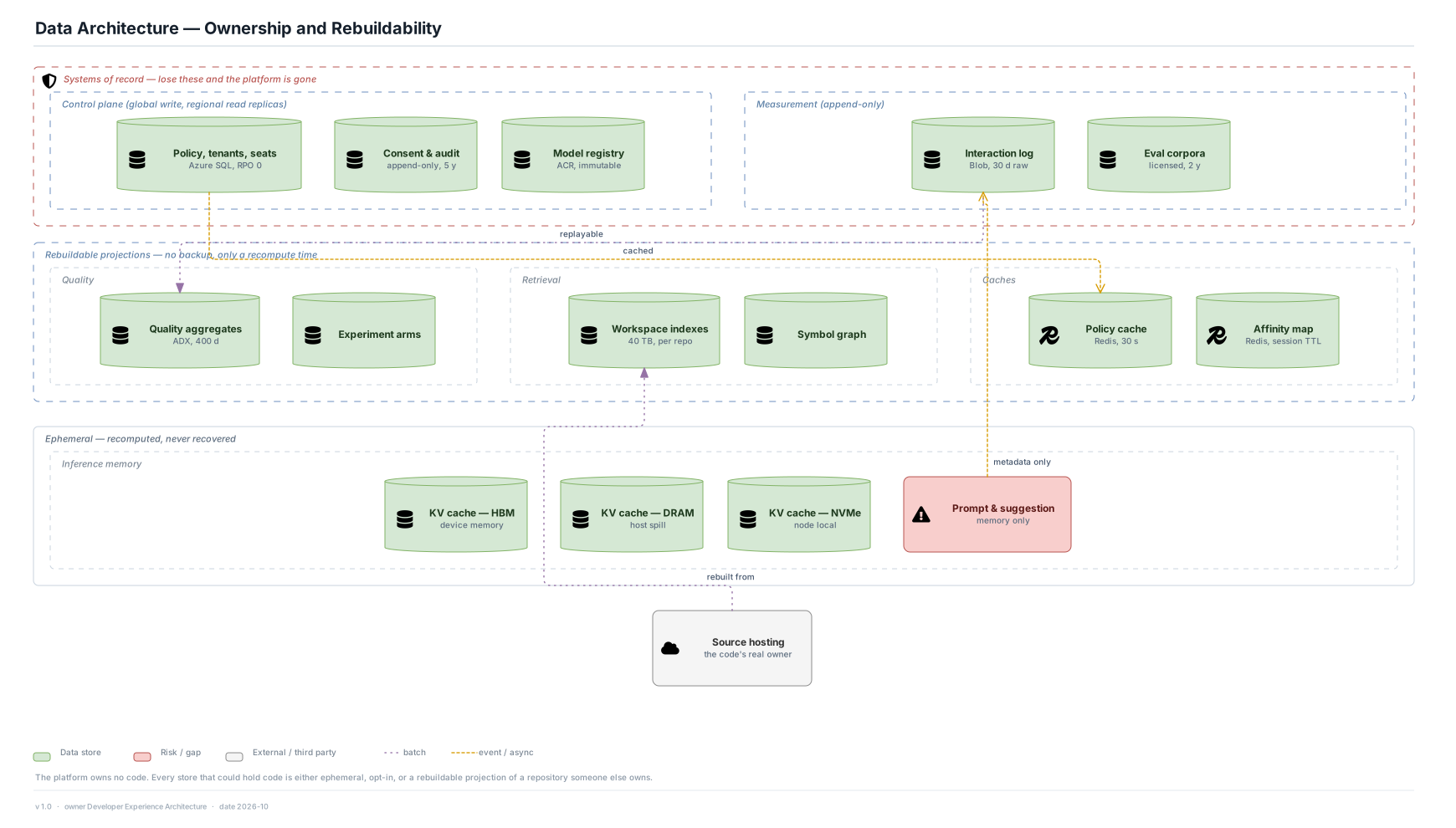
Three bands: systems of record, rebuildable projections, and memory that is recomputed rather than recovered.

Editable source SVG draw.io All views
Systems of record — lose these and the platform is gone Control plane (global write, regional read replicas) Policy, tenants, seats Azure SQL, RPO 0 Consent & audit append-only, 5 y Model registry ACR, immutable Measurement (append-only) Interaction log Blob, 30 d raw Eval corpora licensed, 2 y Rebuildable projections — no backup, only a recompute time Quality Quality aggregates ADX, 400 d Experiment arms Retrieval Workspace indexes 40 TB, per repo Symbol graph Caches Policy cache Redis, 30 s Affinity map Redis, session TTL Ephemeral — recomputed, never recovered Inference memory KV cache — HBM device memory KV cache — DRAM host spill KV cache — NVMe node local Prompt & suggestion memory only Source hosting the code's real owner rebuilt from replayable cached metadata only Data Architecture — Ownership and Rebuildability Data store Risk / gap External / third party batch event / async The platform owns no code. Every store that could hold code is either ephemeral, opt-in, or a rebuildable projection of a repository someone else owns. v 1.0 · owner Developer Experience Architecture · date 2026-10

Decisions

  • RPO is 0 for policy, seats, consent and the model registry, and undefined for prefix caches — not because they do not matter, but because recomputation is the recovery mechanism.
  • Retrieval indexes carry no backup: their recovery objective is a rebuild time against the repository that owns the code.
  • The platform owns no source code. Every store that could hold it is ephemeral, opt-in, or a projection of a repository someone else owns.

Assumptions

  • 40 TB of retrieval indexes across active workspaces; 6 TB/day of telemetry compressed.
  • RTO 5 minutes to serve from another region with cold caches; 60 minutes to rebuild the largest workspace index.

Risks

  • A rebuildable store with a 60-minute rebuild is a 60-minute degradation, not a non-event: during it, retrieval degrades to open-tabs context and acceptance measurably falls.