AI Agent Orchestration Platform  ·  View 32 of 32  ·  6 · Assurance and delivery

Delivery Roadmap

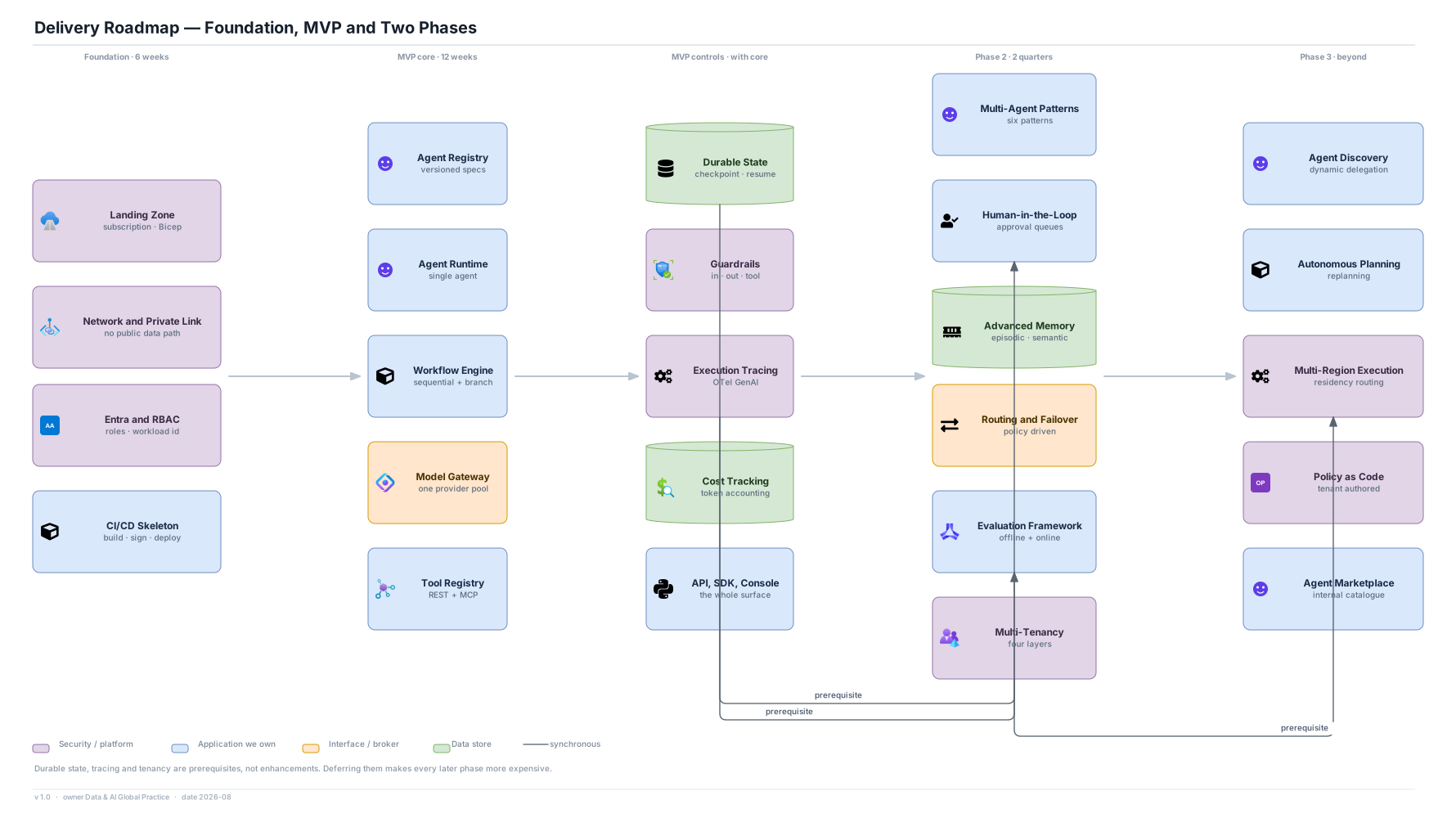
What is built first, what waits, and which items are prerequisites rather than enhancements.

Editable source SVG draw.io All views
Foundation · 6 weeks Landing Zone subscription · Bicep Network and Private Link no public data path Entra and RBAC roles · workload id CI/CD Skeleton build · sign · deploy MVP core · 12 weeks Agent Registry versioned specs Agent Runtime single agent Workflow Engine sequential + branch Model Gateway one provider pool Tool Registry REST + MCP MVP controls · with core Durable State checkpoint · resume Guardrails in · out · tool Execution Tracing OTel GenAI Cost Tracking token accounting API, SDK, Console the whole surface Phase 2 · 2 quarters Multi-Agent Patterns six patterns Human-in-the-Loop approval queues Advanced Memory episodic · semantic Routing and Failover policy driven Evaluation Framework offline + online Multi-Tenancy four layers Phase 3 · beyond Agent Discovery dynamic delegation Autonomous Planning replanning Multi-Region Execution residency routing Policy as Code tenant authored Agent Marketplace internal catalogue prerequisite prerequisite prerequisite Delivery Roadmap — Foundation, MVP and Two Phases Security / platform Application we own Interface / broker Data store synchronous Durable state, tracing and tenancy are prerequisites, not enhancements. Deferring them makes every later phase more expensive. v 1.0 · owner Data & AI Global Practice · date 2026-08

The sequencing argument

  • Durable state, execution tracing and tenant scoping are prerequisites, not enhancements — retrofitting any of the three costs more than building it
  • The MVP is deliberately single-agent: multi-agent coordination on a runtime without durable state and tracing is undebuggable
  • Human-in-the-loop is Phase 2 because it depends on suspension, which depends on durable execution

Indicative shape

  • Foundation 6 weeks, MVP 12 weeks to a production pilot with two agents and one workflow pattern
  • Phase 2 across two quarters; Phase 3 is a portfolio, sequenced by demand rather than by date
  • Steady-state team: 6 to 8 engineers plus a shared SRE allocation and a part-time policy author

Decisions still needed from the sponsor

  • Whether a dedicated-tenancy tier is contractually required at launch, which pulls significant Phase 2 work into the MVP
  • Whether prompt and completion capture is on by default for internal projects — the default is off and legal has not ruled
  • PTU commitment level, which sets the cost floor and determines how much burst traffic pays list price