AI Agent Orchestration Platform · View 18 of 32 · 4 · Runtime
Decisions
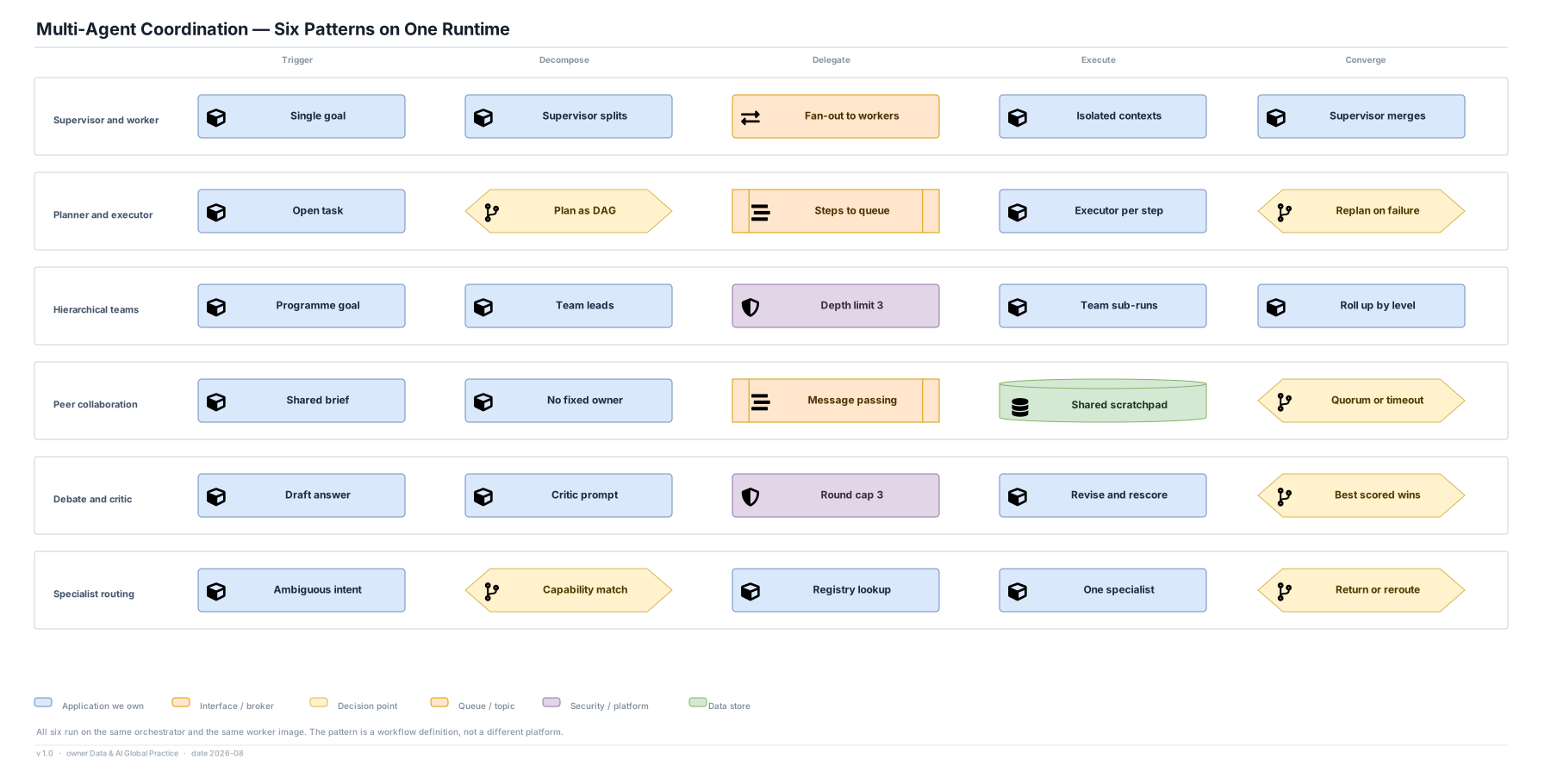
- The pattern is expressed in the workflow definition; the orchestrator and the worker image are the same for all six
- Context is isolated by default and shared only where the workflow declares it, because shared context is how one agent's error becomes every agent's premise
- Agent-to-agent communication is explicit message passing through the orchestrator, not direct calls — otherwise there is no trace and no policy check
Coordination safety
- Delegation depth capped at 3 and debate rounds capped at 3, both from the workflow spec
- A coordination timeout on every fan-in; a missing worker result converges with a partial answer rather than hanging
- Deadlock prevention by construction: the delegation graph is acyclic and validated at publish, and dynamic delegation may not revisit an ancestor
Risks
- Cost grows superlinearly with agents; the per-run token budget is enforced across the whole tree, not per agent
- Dynamic delegation makes cost and latency hard to predict before the run; those workflows carry a lower default budget ceiling
- Peer collaboration with no fixed owner is the hardest pattern to debug; it is Phase 2 and gated on the trace viewer being good enough