AI Agent Orchestration Platform · View 13 of 32 · 3 · Data
Decisions
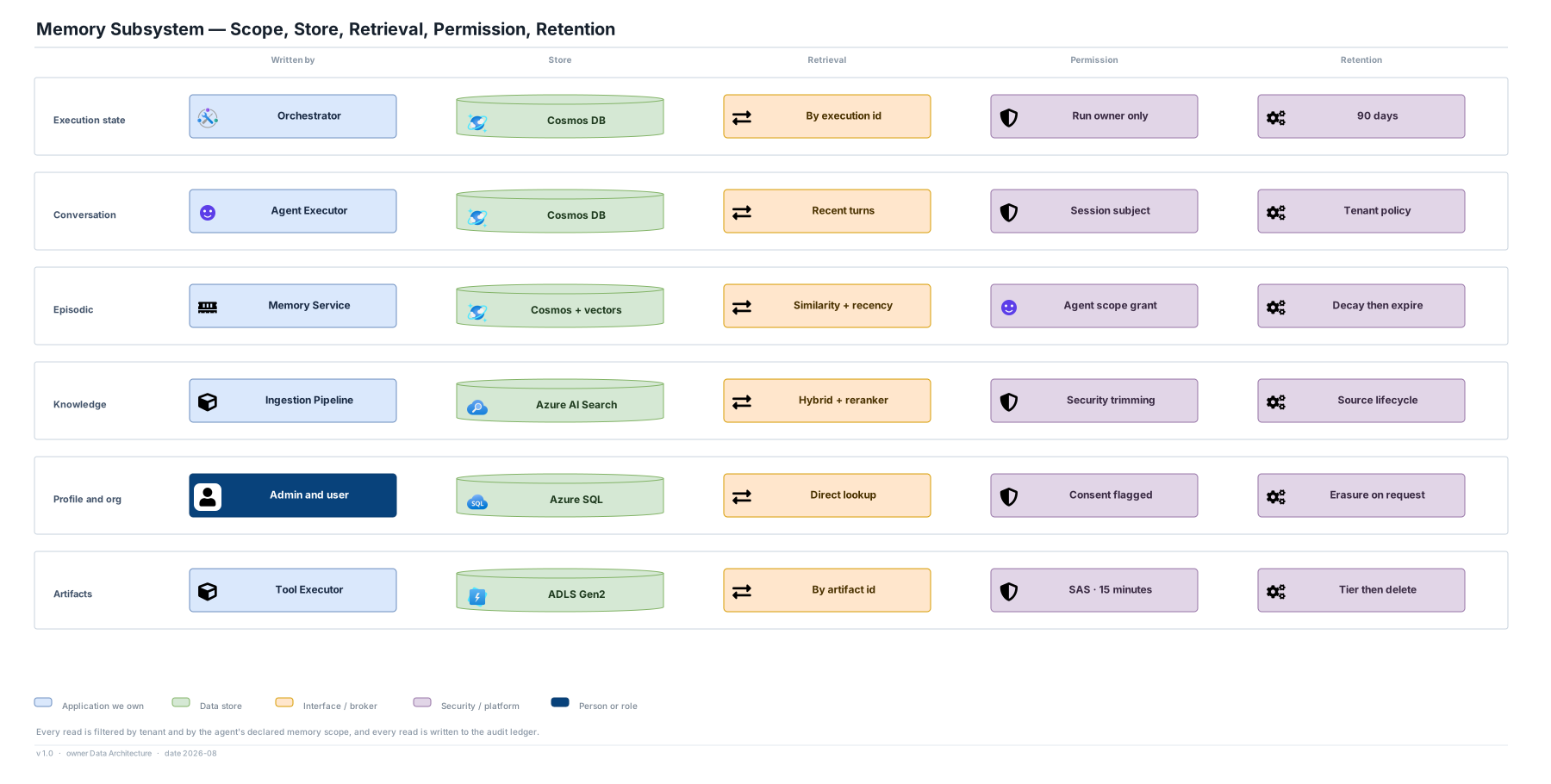
- Execution state and persistent memory are separate concepts with separate stores; conflating them is how a platform leaks one tenant's context into another's run
- Every memory read is filtered by tenant and by the agent's declared memory scope, and every read is written to the audit ledger
- Retrieval is hybrid keyword plus vector with a reranker — vector-only retrieval fails on exact identifiers, which is most enterprise queries
Retention and erasure
- Episodic memory decays on a relevance and recency score before it expires, so the store does not grow without bound
- Profile data is consent-flagged and supports erasure on request, propagating to the index and the artifact store
- Retention is a policy attribute, evaluated at write time and re-evaluated by a nightly sweep
Risks
- Security trimming on the knowledge index depends on source-system ACLs being ingested accurately; a stale ACL is an over-disclosure
- Episodic memory can encode a mistaken conclusion and then reinforce it; memory writes from unverified agent output are opt-in per agent