AI Agent Orchestration Platform  ·  View 11 of 32  ·  2 · Structure

Definition Lifecycle and Versioning

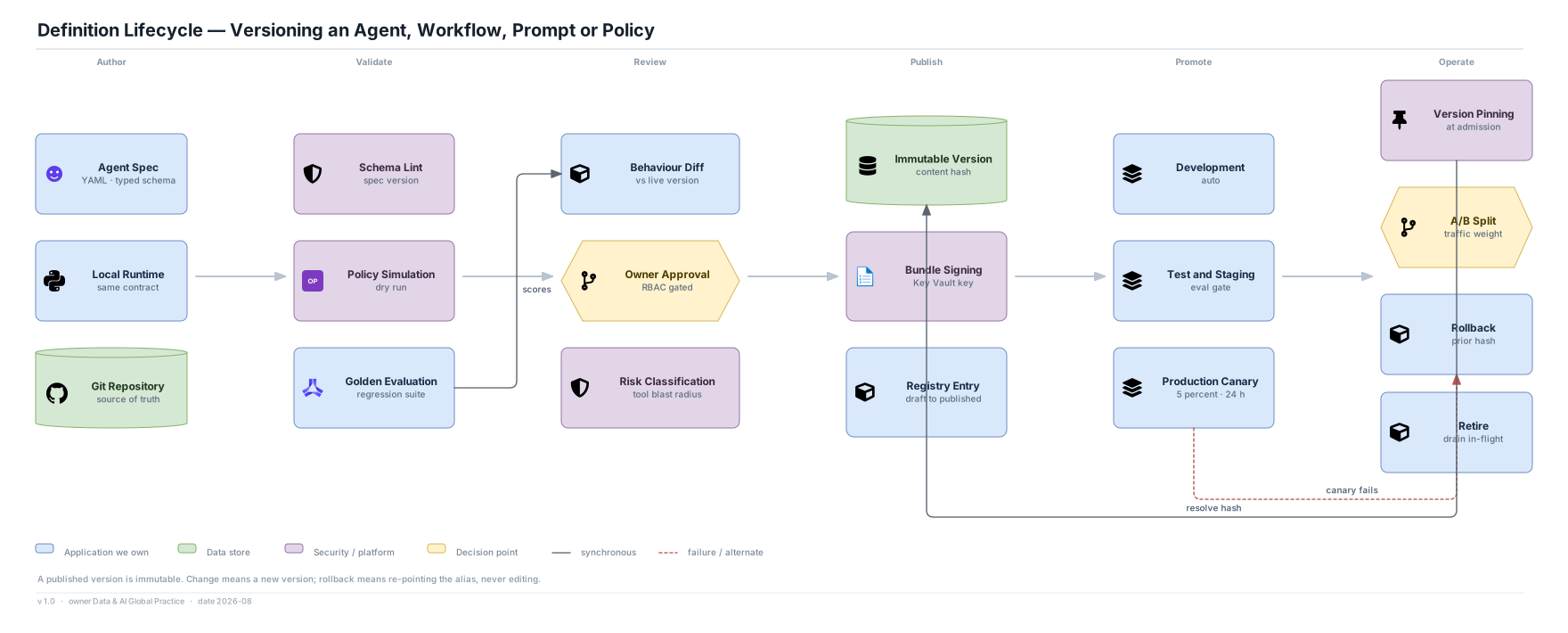
How an agent, workflow, prompt, tool or policy definition becomes an immutable published version.

Editable source SVG draw.io All views
Author Agent Spec YAML · typed schema Local Runtime same contract Git Repository source of truth Validate Schema Lint spec version Policy Simulation dry run Golden Evaluation regression suite Review Behaviour Diff vs live version Owner Approval RBAC gated Risk Classification tool blast radius Publish Immutable Version content hash Bundle Signing Key Vault key Registry Entry draft to published Promote Development auto Test and Staging eval gate Production Canary 5 percent · 24 h Operate Version Pinning at admission A/B Split traffic weight Rollback prior hash Retire drain in-flight scores canary fails resolve hash Definition Lifecycle — Versioning an Agent, Workflow, Prompt or Policy Application we own Data store Security / platform Decision point synchronous failure / alternate A published version is immutable. Change means a new version; rollback means re-pointing the alias, never editing. v 1.0 · owner Data & AI Global Practice · date 2026-08

Decisions

  • A published version is immutable and addressed by content hash; change means a new version
  • Rollback re-points an alias to a prior hash — it never edits or restores in place
  • Prompts and agent definitions travel the same pipeline as code, so a prompt change is a reviewed deployment rather than a console edit

Gates

  • Schema lint, policy simulation and a golden-set regression suite before any publish
  • Behaviour diff against the currently live version, reviewed by the owning team
  • Production entry is a canary at 5 percent for 24 hours, watched on SLO and on quality

Assumptions

  • Every project has a golden dataset before it can promote to production; bootstrapping one is part of onboarding
  • Version pinning happens at admission, so a run that starts on version N finishes on version N